Showing posts with label social media. Show all posts

Saturday, April 20, 2013

Watch out, world! Story of my paper

Okay, so it took forever for me to get my paper going.

     I came up with a couple different ideas for theses and got great feedback from all of you (thank you!) and from my facebookgroupies along with some really solid advice from Dr. Burton. I found all these possible sources, of which I only ended up using a couple, but that’s okay.

     Thanks to some more guidance from Dr. Burton right at the end I changed my whole approach, (from “comparing R&J to MND andproving that MND was better” to “since we have to teach Shakespeare in spite of these risks, we’d better do it right, so here is WHAT to teach and HOW to do it” which was frustrating, but guess what! It made my topic much more accessible.

     Of course I was procrastinating a lot and praying a lot, which is not advisable but worked out for me: the night I was supposed to be writing this paper but getting nowhere I finally gave up at like 12:00 am and decided to just read a couple of articles for my ENG 378 class and then go to bed. Well guess what, those articles were about Shakespeare! And the next day my ENG 378 teacher shared a Scholastic Scope kids lit magazine that had a MND script in it – I was so surprised and very grateful. Those articles and that magazine fit perfectly into my essay. I also had one good response from a question I posted to a teacher Google community that contributed to my thesis. Equipped with these great tools, I stayed up til 3:30 am and finished that dang paper in the nick of time! Now maybe it will be accepted to the venues I have submitted it to (the Rough Magic guys emailed me back and are looking over my full text!) and go on to change the world! 

Friday, April 19, 2013

Leah's Learning Outcame


History, Context, Genres and Themes, and Ethics  - I felt like I exponentially increased my Shakespeare Literacy by studying the plays, watching the movies, and attending the performance. The different genres make Shakespeare accessible and enjoyable - the setting, characters, diction, allusions, themes, and of course the PLOTS make a lot more sense now.
Secondary Scholarship 
I benefited from the other books and articles and blogs and conversations that I read about Shakespeare and his work. I learned to appreciate all that is available about this and other topics.
Scholarly Research 
1. Gain Shakespeare Literacy 
I loved the things I learned about original Shakespeare and about Shakespeare today. I understand it has a huge part in education and entertainment all over the country, around the world, and across various interests and investments (i.e. Shakespeare video games!). I understand Shakespeare better by getting familiar with him/his works through all these different genres.
2. Analyze Shakespeare Critically 
In my essay I compared A Midsummer Night's Dream to Romeo and Juliet and other plays, and had to think critically to decide why MND is, in my opinion, the best option for teaching ninth graders. This required me to focus on this and the other plays and their similarities and differences, strengths and weaknesses, appeal to audiences, and impact on society. I feel like I own Shakespeare in a whole new manner!
3. Engage Shakespeare Creatively 
When we wrote and filmed our sonnets I felt like this helped me to engage creatively with Shakespeare. That was fun and interesting and provided a bit of insight into the bard’s mind, if nothing else than just to think like a poet for a few minutes.
4. Share Shakespeare Meaningfully 
People said they liked my sonnet that I posted on facebook and google +. That’s a good way to share Shakespeare. And I am hoping that the essay I wrote about how to teach Shakespeare will influence teachers and students in a way that is meaningful. I am excited about the venues to which I submitted my paper. I think all the blogging in class was a sort of way to share Shakespeare meaningfully – not really my cup of tea, but required for this class, so I did it. Talking to people about Shakespeare in person was fun and I plan to do more of that for the rest of my life.
5. Gain Digital Literacy 
I learned how to blog, how to upload videos to youtube, and how to find social media groups about pertinent things, like google communities. My digital literacy has been increased. I might even end up blogging this summer as part of my job. Imagine that! I did not think that this kind of research was necessary or the most valuable way to learn and write about Shakespeare, but I guess every thing has its place somewhere. 

Wednesday, April 3, 2013

I'm shaking right now.

Reaching out to people I don't know is scary. I'm not really someone who likes to bother people more experienced and knowledgeable than I with questions they might think as trivial or stupid, frankly.

That being said, I managed to gather enough courage and write Andy Dehnart, creator and writer of Reality Blurred, an e-mail and ask him a few questions. I'm absolutely terrified of his response. What if he thinks I'm completely ridiculous for even thinking up this thesis? What if he tears it to shreds? WHAT IF HE DOESN'T RESPOND!?

But really, this was a huge step for me... I hope it pays off.

This doesn't qualify as "doing my homework"... right?

UPDATE: I also sent out an e-mail to Dr. Beverly Thompson, a professor who taught (is teaching?) a course on reality TV. We'll see how that goes too!

Thursday, March 14, 2013

A Tool that Might Help Everyone

Hey everybody,

There's been a lot of posts about difficulty this week, so I thought I could maybe lend a hand.

I don't know how many of you have ever heard of Disqus, but it's kind of a community for communities on the internet--they try and collect all the discussions on the internet into one place, and let you talk on all these discussions with one profile. They have a new tool called Gooqus that lets you search for discussions happening on the internet. Just put anything in the search box and make sure you click that "Disqus (discussion enabled sites)."

This will obviously help you find forums for your topics, but also might help spur new ideas about what you're thinking about.

Hope it helps! Good luck, team!

Paul

Monday, March 11, 2013

Brave New Worlds: Finding Forums for My Topic

After extensive search on the subject, I found two forums discussing specifically Shakespeare as a video game designer, one on Kotaku, and one on The Escapist.

The funny thing was how opposite the opinions were. Kotaku had some naysayers, but it seemed that several of them thought Shakespeare would actually work out as a game designer. On The Escapist, however, it was almost a unanimous "NO."

The Kotaku forum is now closed, but I linked to my "The Tempest: The Video Game" post on The Escapist and told them a little of what I thought. Hopefully I'll persuade somebody.

Looking forward, I want to find more forums about video games as art, and possibly even the connection of art and theatre, as that seems to be where the most people think the real meat of my topic is.

Friday, March 8, 2013

Facebook Freakouts

This might be a little early on to post this, but I already threw up one possible thesis on Facebook to see how people would respond and I was super surprised at the result.

Here's what I posted:


Within 24 hours, the post had generated 26 comments (several by me replying to others) by 6 different people and likes from 5 more people. They ranged from this:


To this:


And this:


And even this:


(Notice this one got 5 likes.)

So, while I'm not quite sure I got much useful feedback to help guide my paper, I did get to articulate my ideas better as I responded to all of these people, and I found out at the very list this topic gets people talking about Shakespeare even if they normally wouldn't bring him into everyday conversation.

If nothing else, it keeps me thinking about my topic. This is fun!

Wow, let me tell you, Wow.

oh dang I typed this up and thought I'd posted it hours ago. Lame. Sorry!

Reading through Dr. Burton's posts and articles about social proof are helping me come to terms with the validity of social networking for professional and academic purposes. I think my "social graph" would consist of Google Plus and Facebook, plus my roommate circle and family members who are, fortunately, mostly English majors (sweet!). They give me good feedback and I am becoming more and more dependent on them.

I proposed these three paper topic ideas on Facebook and Google+ and talked to my roommate about them, and thanks to comments from my family, old high school teachers, friends and an almost ex boyfriend, I've been able to narrow down my ideas. Before I tell you the direction in which I am narrowing, though, what do YOU think?


Ideas for my Shakespeare paper: 
Most effective ways to teach A Midsummer Night's Dream to a high school class. 
OR Why A Midsummer Night's Dream is a better choice for a high school class than Romeo and Juliet. 
OR Why teach Shakespeare to teenagers: Five life lessons to be learned through A Midsummer Night's Dream.

Thursday, March 7, 2013

The Internet is Real: A Story of Social Discovery

My video game idea came as a direct result of me learning that the internet is a real thing. By that, I mean I realized I could use it to connect with real people and real ideas, not just learn about celebrities and current events, watch Netflix, and otherwise waste time.

It all started when I got home from my mission and my brother told me to check out TED. I was free and looking for a way to get back into the world but keep doing good, so I checked it out.

Holy crap.

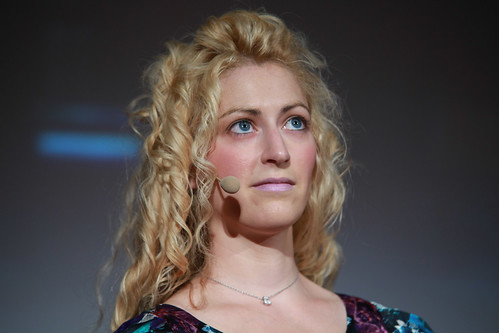
Jane McGonigal
(CC BY-SA 2.0 by  Meet the Media Guru)
I loved it. I ate it up. But then I ran into this talk by Jane McGonigal, and things really started cranking.

When I got a job with Coach Alba, a tech start-up in Provo, I had to set up a Twitter account. McGonigal was one of the first people I followed.

Because I followed her, I found out I could get a signed copy of her book, Reality is Broken, for Christmas.

Reading her book and following her on Twitter, I kept expanding my internet lens until I ran into a BuzzFeed article about the new Bioshock game, which led me to a ridiculously intellectual review of the original Bioshock by Clint Hocking.

So I started following Hocking as well. His recent post covering his speech for the Art of Games exhibit at the EMP museum quite possibly changed my life, and is the motivational fuel behind my whole paper.

And that, friends, is why the internet is a good thing.

Wednesday, March 6, 2013

"All the world's a stage": Mixing up Legit Criticism and Social Sharing

"Within 22 hours I've managed to lose a hat, an iPad, and a pair of glasses. So far I've got the . iPad back. Still hoping for the rest v."  This is a tweet, but it isn't mine.

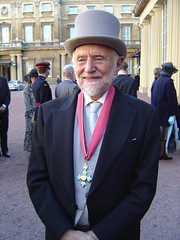
Stanley Wells, Shakespearean scholar
Creative Commons: Shakespeare Birthplace Trust

Stanley Wells, who did, is the "Honorary President of Shakespeare Birthplace Trust." Dr. Burton mentioned that he unexpectedly discovered Wells had a twitter account in Dr. Burton's post on using twitter.  I thought this would be a good place to start with using social media, so I created a twitter account (atRachelizo) and decided to follow Stanley Wells.  I'm hopeful that as I can refine my questions about romance and fate playing a role in romance, I'll be able to contact him and ask him about more about the play.

Monday, March 4, 2013

Thoughts from a virgin blogger...

First of all, I found Professor Burton's outline and reading other students' posts really helpful in understanding the social networking, development and research that goes into the process of the this paper. I read over Jessica Asays's posts and found her learning outcomes very relieving. I can totally connect with being initially intimidated by Shakespeare at the beginning of the class, and now, feeling a little more capable of handling his work. Breaking down the process into different steps and having questions to be able to focus our efforts on is really helpful to making this seem do-able.

Secondly, I'm excited to be using all of these new social media and experience interaction digitally and personally with friends, family, co-workers, and classmates. I'm not very familiar with blogging and tweeting and such, and even though it's hard to put myself out there in this way, I think it will be a worthwhile and rewarding experience.

Sunday, March 3, 2013

HECK YES

That's my answer to the question we were supposed to respond to ("Have I reviewed my own recent writing and thinking and identified texts and topics of real interest to me?"), But also my general response to this whole experience that Dr. Burton is setting up for us. I just feel like this is why we live in the age we live in--to talk like we've never talked before and think like we've never thought before and create like we've never created before. I want to do something new because I want to live in the world I live in now, simply because no one else before us got to and I feel like we should take full advantage of it because they're probably jealous.

So I want to write about Shakespeare and video games. I feel like The Tempest is a great springboard, but I hope to touch on many other plays as well. I want to prove we've learned from the past, but I want the past to learn from us as well. I want to create dialogue that's never happened before--both between people and between texts (media? I don't even know how to jointly label Shakespeare with video games).

I wasn't only just excited by my own ideas, however (that would be kind of hypocritical to what I'm saying here). I also was really excited by Nyssa's idea about Kate not being tamed, but just putting on the final disguise of the play, as well as David's idea of the symbolic nature of the names in A Winter's Tale, and Mikaela's ideas of how Shakespeare presents Time almost has a dominant force over men. Lots of great stuff.

Make Me a Believer! . . . in Blogging

After perusing the blog I really liked Marsha's 'paper story' particularly because she had a hard time deciding on her topic.  At this point I feel like I am in the same boat as she was so it was really encouraging to read and see how her use of social media helped her refine her topic and view it in a different light.

For me it's super daunting to write a paper that would be worthy for publication and, at this point, one of my biggest hurdles is finding a paper topic that would support the amount of research that such a paper would entail.  Marsha's story made me a believer in Professor Burtons methods.

Oh, is that why they invented Facebook?

While browsing the various "process" articles, I found one post that was particularly encouraging.

An earlier post I'd read filled my initial idea full of holes, revealing that tons of stuff had been said about my particular topic already. With that kind of background  I didn't think that there was much I could say to contribute to the discussion.

But then I found this post. In it, Janelle talks about how she was able to use social media as a way to refine her ideas, and how she was able to turn her somewhat nebulous idea into a firm thesis, largely on account of Facebook. To me, this was very encouraging; now I think that I might be able to talk about a few directions I want to go in, then see what people think would be compelling.


Friday, December 14, 2012

Dana's Learning Outcomes

1. Gain Shakespeare Literacy
I have now read, watched, and/or studied numerous Shakespeare plays, including Troilus and Cressida, Henry V, King Lear, The Winter's Tale, Hamlet, Much Ado About Nothing, As You Like It, and A Comedy of Errors. I feel like this breadth has given me a wider knowledge of Shakespeare's great range of emotion and writing ability. In addition, I have done a more in-depth study of Henry V and Troilus and Cressida as I spent a substantial amount of time researching the plays and criticism about those plays. I have studied Troilus and Cressida in depth for over a month now as I have worked on perfecting my paper about it. In addition to this textual knowledge, I have gained an insight into Shakespeare by watching performances on stage of Henry V and A Comedy of Errors, and watched versions of King Lear, Henry V, Hamlet, The Tempest, and As You Like It. In addition to all of this literacy I have gained of the actual plays, I have learned so much more about Shakespeare in popular culture. Who knew that people have discussion groups about him over the internet or Twitter? I also learned more about Shakespeare's life, birthplace, wife, and schooling--what shaped him as a person and perhaps influenced his writings--as I watched a movie about his life, read various pieces of scholarship that gave his background as I wrote my paper, and reflected upon my visit to Stratford-upon-Avon this past summer.

2. Analyze Shakespeare Critically

All of the responses we posted on Learning Suite and the blog, as well as the scholarship we did in our papers, was basically a continual analysis of Shakespeare. In my paper about Henry V, I looked at the language of the play to make my argument (e.g., the definitions of words, the puns on words, etc.). I also examined the theme of the overall play and drew upon my examination of the language to interpret the theme. In this post, I analyzed the stage version of Shakespeare's As You Like It, where I was able to interpret the set, tone, actor interaction, and viewer interaction of the play and explain how those elements might have affected how the play was interpreted. I have also analyzed the effects of Hamlet and Henry V on screen. This semester, I have really learned how to look at small details within a play on stage or on screen and understand what those small elements mean in relation to the whole play. In my paper on Troilus and Cressida, I looked at the contextual analysis (what sources Shakespeare drew upon for comedy and tragedy, what viewers at the time would have expected from a comedy or tragedy, what the "cultural" norms of a play were) in order to analyze the text as a whole and understand how genre played a role in interpreting the play. I have certainly realized the importance of both textual and contextual analysis as I have interpreted Shakespeare's works.

4. Share Shakespeare Meaningfully

I certainly participated in formal writing this semester. I spent the past month or so writing my paper about Troilus and Cressida. To do this, I went to the library to find scholarly sources (and checked out around 10 to 15 books), looked for various resources online, and wrote my paper in a formal and professional manner. I submitted the paper to the BYU English Symposium, Criterion, and the Scholars' Archive. In addition, I wrote another literary analysis paper about Henry V earlier in the semester. But I haven't limited my writing to formal outlets. I have also posted regularly on both Digital Dialog and the blog in order to analyze numerous plays and respond to others' ideas. In addition, I have discussed my paper with several students in the class and even discussed my paper with my roommates, family, and friends.

5. Gain Digital Literacy

I learned that scholarly work doesn't have to be limited to the classroom or to traditional forms of sharing! I have found ideas for my paper from Twitter, Google+, Facebook, Goodreads, blogs, and many other "nontraditional" sources that I had originally thought would never have any content about Shakespeare. I also posted my own scholarship on this blog and on YouTube, which were new mediums of scholarly publication that I had never delved into. I also tried to connect with friends on Facebook about Shakespeare, and even connected with an old professor of mine to discuss the genre of tragedy. She gave me help that influenced my paper and I was able to reconnect with her after several years (a double bonus of sharing scholarship on social media).

Reflection
This class has really boosted my understanding, not only of Shakespeare, but of how I can research and write in general. I really enjoyed the amount of time we were able to spend on the final paper. Most of the time, teachers give little time for students to produce a piece of work, but in this class we had about a month to produce a final draft. The blog held me accountable for my learning and spurned me to start my research process earlier. In this way, I was able to have a more solid idea when I actually started writing. The feedback I received from the students on the blog was also helpful because it turned me in the right direction for my final paper. Without this feedback, I wouldn't have been able to write as strong of a paper. Finally, I enjoyed making a video about my paper. This activity helped me narrow down my thesis. Not only did I learn more about how to write a paper, but I also learned the importance of seeing a Shakespeare work on the stage or on the silver screen. Of course reading a Shakespeare play is interesting, but watching the play really brings it to life. I like looking for all of the possible permutations that are available for each play. The focus of our class helped me understand Shakespeare as a living subject.

Thursday, December 13, 2012

The Story of My Research Paper

In the beginning of my writing process, I knew that Troilus and Cressida was a story about lovers, so I wanted to explore the idea of love and the ancient Greek culture. However, I realized that the play was about jilted love--and in most people's opinions (according to Goodreads and Twitter), very depressing. It was helpful to get an opinion of what the general public though of the play because it helped me come up with my final idea. In my first post, I had several theses, but I was intrigued that Troilus and Cressida was an "anti-tragedy." In these preliminary stages, I had some trouble finding adequate sources, but as I explored the Twittersphere, I gained a clearer understanding of "anti-tragedy." In my preliminary draft, I spent too much time proving that the play wasn't a tragedy and not enough time explaining the implications. The feedback I received from fellow students was helpful, and my video post also defined my argument. As I wrote my paper, I realized that Troilus and Cressida not only resists tragedy, but of all genres. I tried to make my paper scholarly because I wanted to submit it to several publications. Knowing that my paper was going public helped me produce a final product that I would (almost) be comfortable submitting to Criterion. However, as I have revised my paper, I have come to an even greater understanding of my topic and of the play. Writing my paper has been a journey enriched by multiple social circles.

Monday, November 12, 2012

Troilus and Cressida: "Public"ations

In my last post, I talked about The Shakespeare Institute Review. I contacted the journal to find out if they accept undergraduate work (on their website they only mentioned that they accept postgraduate work). I told them about our class and told them we were looking for places to submit our work. I also asked them what topics they prefer to publish. I haven't heard back from them yet, but I'm hoping to hear back soon! One caveat of the journal is that they publish works in British English, which may make submitting to them somewhat difficult, but I'm sure there are only a few items that would need to be tweaked in order to conform to those standards. 

They also accept submissions between 1500 and 3000 words. They just had a submission deadline for the journal, and from what I could gather, they seem to be interested in a specific theme for each journal, but they seem to want a multi-faceted view on that topic. They like seeing historical views, views connected to modern-day interpretations, views on how Shakespeare relates to psychology, politics, religion, and so forth. So if their target theme is something that connects with what you are writing, I am sure they would be interested in it. As I read through one of the older journals, I found that the submissions were very textual. Just another reason to work on our close analysis of a text as we work on our drafts.

Seeing Macbeth through Marketing Lenses

          I have been questioning my initial paper from the start. At first it was about how the play of Macbeth has been interpreted in Brazil. I initially thought this would be a cool idea, but when I got to think about I noticed that my heart simply wasn't in it. I felt it somehow wasn't relevant enough for the current times.

          Going with our theme of collaborating socially to construct our papers, over the weekend I changed my topic to be about how the Macbeth play has been marketed in the past and present (last decade mostly). I like this topic because it feels fresh for the times we live in and since we live in a society so bombarded with media, marketing and advertising, I figured there'd be a lot of sources and information to draw from. My ultimate goal is to formulate a paper that suggests new ways in which this particular play can be marketed today to attract a larger audience. The younger crowd would be the most to benefit from these marketing efforts, because they're the ones who are perhaps the least interested in Shakespeare generally.

          I hope my paper may be a stepping stone to Shakespeare production companies, theaters, etc. to better market their plays. We all know the importance of a first impression. In this day and age, the first impression, if not done right, may linger negatively for a considerably long time in people's collective consciousness, which indirectly influences thousands and perhaps even millions, of peoples' impressions.

          I have researched mainly online, sending tweets to around 50 Shakespeare "people" and also emailing a few professors of mine in the Communications department. These professors are professional advertisers, as well as BYU teachers now. Tomorrow I'm also going to meet with Robert Means, the subject librarian.

          My questions to you guys is this:

- What are some other methods of research you think I could use for my paper?

- How can I combine this contextual analysis with the text of Macbeth itself?

Wish me luck.

Tuesday, November 6, 2012

Social Proof

I was very surprised at the amount of feedback I received when I posted my ideas. My Facebook post about my thesis received a like and three comments, which was fun. I was also pleased to see that the people who responded to my post were engaging with each other. My cousin and my friend were validating each others' ideas through likes and comments, which was fun to see. Also, thanks to Jessica from our class. :)


What I was really excited about though, was the response I received from my old English teacher from high school. I was a little worried that I wasn't going to get a response, but I have been able to share ideas with her. One thing she said changed my research question a bit. She was writing to me about how Shakespeare is one the best psychologists. When she said that I thought that psychology was interesting and so I changed my research topic to focus a little more on how Shakespeare's works can apply to adolescent psychology. This is an angle that I was not planning on taking, and it is moving into a realm that I am unfamiliar with, but I'm excited. Any tips would be appreciated!

I messaged my teacher back to see if I could post our conversation on the blog, I will keep you all updated. Meanwhile though, I have enclosed a funny conversation I stumbled upon that illustrates the importance of teaching Shakespeare. We need to have a basic knowledge of Shakespeare if only so we can understand pop culture. My favorite though, is the comment that talks about the importance of "Shakespear." Oh no...


Shakespearian Marriage Politics

Well, I didn't get as many responses to my Facebook or blog/forum posts as I had hoped, but I did get some helpful ideas from my former-English-professor grandfather in response to my Facebook message that helped me better hone my search. Imagine that! I didn't expect him to be one who communicates through Facebook, so that was fun.

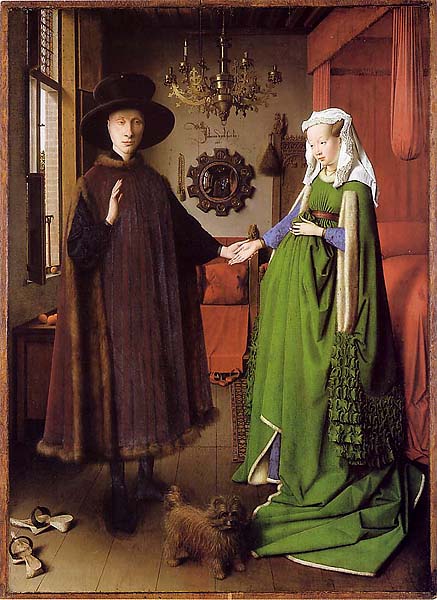
In the course of my research, I found an article which references a painting by Jon van Eyck which reflects the tradition of "common consent" marriage practices I'm discussing in my analysis. Although I'm not currently planning on using the picture in my paper, I thought it would be interesting to include it here for reference. And maybe it will even be useful for one of you...?

(Interesting note: although only the couple is present, the mirror reflects four people, perhaps representing God and the painter--or observer of the painting--as witnesses of their marital vows.)

Now, normally I wouldn't be any more willing to let people read my draft at this point than I would be to let them rifle through my sock-and-underwear drawer, but... here are the first few pages of my draft in all its odious roughness:

Monday, November 5, 2012

Revisions, revisions.

I misunderstood the original tweethis/bibliography post idea, and split them up. The combined/revised version follows:

Tweethis. Prince Hal in Shakespeare's Henry IV, Part 1 surely grew much in his experiences with Falstaff and the lowbrow tavern crowd, so much that he understood better the common man in his later ascent to the throne and in his reign as King Henry V. However, looking at some chronicles of history concerning Hal's relationship to King Richard II, Shakespeare's depiction of Hal's rebellion can be seen as a manner of disapproval or dissatisfaction with his father's usurpation of the crown.

Social Graph. With my thesis leaning toward a historical approach, and my lack of friends who have a knowledge of British history, I haven't been able to get much from roommates, friends or family. I admit I'm also hindered by the fact that I haven't had any formal schooling on British history myself.

New Media. I've dabbled in goodreads and imdb for a few. I've enjoyed reading several reviews on goodreads about not only Henry IV, Part 1, but I also ended up looking into what people had to say about the preceding play, Richard II, and also Henry IV, Part 2. I watched the most recent film adaptation of this play which is part of a BBC series titled The Hollow Crown, which covers from Richard II to Henry V. This version's portrayal of Prince Hal is pretty true to what Shakespeare wrote him to be, so while I really loved the production, it didn't back me up with where I'm going. Back to goodreads for a second, I also checked for groups on Henry IV, but I was given nothing.