Stanley Wells, who did, is the "Honorary President of Shakespeare Birthplace Trust." Dr. Burton mentioned that he unexpectedly discovered Wells had a twitter account in Dr. Burton's post on using twitter. I thought this would be a good place to start with using social media, so I created a twitter account (atRachelizo) and decided to follow Stanley Wells. I'm hopeful that as I can refine my questions about romance and fate playing a role in romance, I'll be able to contact him and ask him about more about the play.
Showing posts with label twitter. Show all posts
Wednesday, March 6, 2013
"All the world's a stage": Mixing up Legit Criticism and Social Sharing
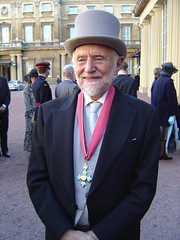
"Within 22 hours I've managed to lose a hat, an iPad, and a pair of glasses. So far I've got the . iPad back. Still hoping for the rest v." This is a tweet, but it isn't mine.
Stanley Wells, who did, is the "Honorary President of Shakespeare Birthplace Trust." Dr. Burton mentioned that he unexpectedly discovered Wells had a twitter account in Dr. Burton's post on using twitter. I thought this would be a good place to start with using social media, so I created a twitter account (atRachelizo) and decided to follow Stanley Wells. I'm hopeful that as I can refine my questions about romance and fate playing a role in romance, I'll be able to contact him and ask him about more about the play.
Thursday, December 13, 2012
The Story of My Research Paper
In the beginning of my writing process, I knew that Troilus and Cressida was a story about lovers, so I wanted to explore the idea of love and the ancient Greek culture. However, I realized that the play was about jilted love--and in most people's opinions (according to Goodreads and Twitter), very depressing. It was helpful to get an opinion of what the general public though of the play because it helped me come up with my final idea. In my first post, I had several theses, but I was intrigued that Troilus and Cressida was an "anti-tragedy." In these preliminary stages, I had some trouble finding adequate sources, but as I explored the Twittersphere, I gained a clearer understanding of "anti-tragedy." In my preliminary draft, I spent too much time proving that the play wasn't a tragedy and not enough time explaining the implications. The feedback I received from fellow students was helpful, and my video post also defined my argument. As I wrote my paper, I realized that Troilus and Cressida not only resists tragedy, but of all genres. I tried to make my paper scholarly because I wanted to submit it to several publications. Knowing that my paper was going public helped me produce a final product that I would (almost) be comfortable submitting to Criterion. However, as I have revised my paper, I have come to an even greater understanding of my topic and of the play. Writing my paper has been a journey enriched by multiple social circles.
Monday, November 12, 2012
Seeing Macbeth through Marketing Lenses
I have been questioning my initial paper from the start. At first it was about how the play of Macbeth has been interpreted in Brazil. I initially thought this would be a cool idea, but when I got to think about I noticed that my heart simply wasn't in it. I felt it somehow wasn't relevant enough for the current times.
Going with our theme of collaborating socially to construct our papers, over the weekend I changed my topic to be about how the Macbeth play has been marketed in the past and present (last decade mostly). I like this topic because it feels fresh for the times we live in and since we live in a society so bombarded with media, marketing and advertising, I figured there'd be a lot of sources and information to draw from. My ultimate goal is to formulate a paper that suggests new ways in which this particular play can be marketed today to attract a larger audience. The younger crowd would be the most to benefit from these marketing efforts, because they're the ones who are perhaps the least interested in Shakespeare generally.
I hope my paper may be a stepping stone to Shakespeare production companies, theaters, etc. to better market their plays. We all know the importance of a first impression. In this day and age, the first impression, if not done right, may linger negatively for a considerably long time in people's collective consciousness, which indirectly influences thousands and perhaps even millions, of peoples' impressions.
I have researched mainly online, sending tweets to around 50 Shakespeare "people" and also emailing a few professors of mine in the Communications department. These professors are professional advertisers, as well as BYU teachers now. Tomorrow I'm also going to meet with Robert Means, the subject librarian.
My questions to you guys is this:
- What are some other methods of research you think I could use for my paper?
- How can I combine this contextual analysis with the text of Macbeth itself?
Wish me luck.
Going with our theme of collaborating socially to construct our papers, over the weekend I changed my topic to be about how the Macbeth play has been marketed in the past and present (last decade mostly). I like this topic because it feels fresh for the times we live in and since we live in a society so bombarded with media, marketing and advertising, I figured there'd be a lot of sources and information to draw from. My ultimate goal is to formulate a paper that suggests new ways in which this particular play can be marketed today to attract a larger audience. The younger crowd would be the most to benefit from these marketing efforts, because they're the ones who are perhaps the least interested in Shakespeare generally.
I hope my paper may be a stepping stone to Shakespeare production companies, theaters, etc. to better market their plays. We all know the importance of a first impression. In this day and age, the first impression, if not done right, may linger negatively for a considerably long time in people's collective consciousness, which indirectly influences thousands and perhaps even millions, of peoples' impressions.
I have researched mainly online, sending tweets to around 50 Shakespeare "people" and also emailing a few professors of mine in the Communications department. These professors are professional advertisers, as well as BYU teachers now. Tomorrow I'm also going to meet with Robert Means, the subject librarian.
My questions to you guys is this:
- What are some other methods of research you think I could use for my paper?
- How can I combine this contextual analysis with the text of Macbeth itself?
Wish me luck.
Sunday, November 11, 2012
People are actually RESPONDING!!!
Here is the update of my annotated bibliography and a little more information.
Monday, November 5, 2012
Using Twitter for Academic Research
I'm a big proponent of turning to new media and social networks when doing traditional academic research. If one goes straight to library catalogues or the indices of academic journals, this is problematic for two reasons: you are pursuing a less efficient, non-social mode of inquiry; and you are consulting only what I call "fossil knowledge": knowledge that has great value, but is not living because one cannot interact with it, and it has been taken out of discursive contexts where it can grow and develop.
Therefore, I'm training my students to follow a socially optimized research strategy that consists of four broad steps:
- Tell people
- Curate your research
- Search new media and social networks
- Search traditional scholarship
I have focused on the first two of these steps in a blog for another course. Here, I'd like to focus on the third step, searching new media and social networks, with an emphasis on using Twitter.
Subscribe to:
Posts (Atom)

