I have successfully submitted my paper to the Scholar's Archive at BYU (after checking over it once again to make sure I haven't accidentally mis-cited things), as instructed!
I have also submitted my paper to BYU's Criterion. While discussing my paper with Dr. Burton, he mentioned that my paper is less of an academic one, so a blogging atmosphere might be more appropriate for it. I did want to try to submit it to a journal, so I felt this would be a more willing one, but if it isn't accepted to the Criterion, I'm going to shorten it, change it into a blog post style, and submit it to the blog No Sweat Shakespeare for publication, as I've already talked to Ed Goldswain about the possibility of publishing on the blog.
Showing posts with label Romance. Show all posts
Showing posts with label Romance. Show all posts
Wednesday, April 17, 2013

Thursday, April 4, 2013
Realistic Unrealism in the Winter's Tale and a Rough Draft
Rachel
Olson
English
382
Dr.
Burton
28
March 2013
Choosing Not to Believe: Realistic
Unrealism in The Winter’s Tale
“If you had to choose between romances
and tragedies, which would you say is the genre most true to life?” Well, first we’d have to decide what we mean
by romances. Instead of the kind
involving romantic love, we’d be discussing the genre of William Shakespeare’s The Winter’s Tale. But even after we discuss romance as a mixture
of tragedy and comedy, we still have a tendency as a society to answer firmly,
“Tragedy,” to what is true to life. It
is easier to believe that the worst is going to happen, that positive thinking is
wishful thinking. Romances, however, are a mix of tragedy and comedy. Although Shakespeare's romance The Winter's Tale has been accepted and
enjoyed by the masses, the romantic elements of mixing genres and the influence
of the supernatural within it have led to the critics’ rejection of the play on
an intellectual level. Leontes' interaction
with the oracle in the play thus becomes a metaphor for this rejection of the
romance, as it is a rejection seemingly based on a desire for “realism.” In reality, this rejection of the romance of The Winter’s Tale is predicated on an
inability to recognize that the romantic elements of the play—its mixture of
genres and supernatural elements—are in fact what makes it realistic.
Monday, April 1, 2013
A Long Winter's Tale
I'll be posting a list of potential venues today, but I wanted to put up more of the draft I've been working on and see what you think!
Thesis: When
asked what genre is most true to life, most people would answer tragedies. We
have a tendency as a society to believe that the worst is going to happen, and
hoping anything positive will is wishful thinking. Romances, however, are a mix
of tragedy and comedy, and while Shakespeare's romance The Winter's Tale has
been criticized since its beginning as being unrealistic, Leontes' experience
with the oracle within the play becomes a metaphor for the audience's rejection
of The Winter's Tale, seemingly based on a desire to be realistic, but in
reality predicated on an inability to see recognize the romantic elements of
life.
Thursday, March 21, 2013
"It's a Dangerous Business": A Rough Draft
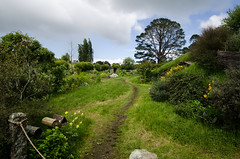 |
| . . .writing a rough draft. "You step onto the road . . . [and] there's no knowing where you might be swept off to." Creative Commons "Path to the Tree" from Arbron |
I have sources and quotes for most of my paragraphs, but beyond my draft I don't have written paragraphs. I also need to add in to my outline more evidence and more quotes from the primary text, but I'm feeling optimistic about my thesis.
This is the rough draft of the paper below. I hope that you enjoy it!
Tuesday, March 12, 2013
Digest the Info: Finding my Thesis
This is where I am in brainstorming about a thesis:

The colored web makes me feel more hopeful that there is a thesis soon to come. I think the ideas, although separated by different colors, could come together in some way, like "Is Hermione really dead?" relating to "Ekphrastic element of Shakespeare's work."
Venting: Hermione's 16-year long hide-out?
I just thought it would be good to post a little venting. I feel like there are some good starts to ideas going on in my brain about The Winter's Tale, but they're pretty scattered and varied. Paul suggested I look at the scene with Hermione's statue coming alive.
I did that today and it's pretty compelling, especially because whether or not her being there is a miracle is ambiguous. I'm thinking about the part that kind of magic plays in Shakespeare's romances versus tragedies, but I can't seem to decide where I stand on whether or not Hermione coming alive was a miracle or just a 16-year long hide-out in Paulina's house, and I'm not sure how to connect that in a meaningful way to what I've read about romance and tragedy. What do you guys think? Is there a direction I could go that strikes you as particularly interesting?
I hope as I go back and read literary criticism and more of the primary text, like what was suggested in class, my stance on Hermione and the connection between her, romance, and tragedy, will be more apparent. Thanks for your help!
I did that today and it's pretty compelling, especially because whether or not her being there is a miracle is ambiguous. I'm thinking about the part that kind of magic plays in Shakespeare's romances versus tragedies, but I can't seem to decide where I stand on whether or not Hermione coming alive was a miracle or just a 16-year long hide-out in Paulina's house, and I'm not sure how to connect that in a meaningful way to what I've read about romance and tragedy. What do you guys think? Is there a direction I could go that strikes you as particularly interesting?
I hope as I go back and read literary criticism and more of the primary text, like what was suggested in class, my stance on Hermione and the connection between her, romance, and tragedy, will be more apparent. Thanks for your help!
Monday, March 11, 2013
After the Final Rose (My happily ever after?)
I did it. I found my connection, my Shakespeare research paper soul mate, and we're in love. Hopefully this love lasts longer than any Bachelor contestant's love, because I'm not here to play games. I'm here to find my thesis.
Ok, enough with the lame Bachelor jokes (they relate, I promise). This past week or so I've been struggling to find a topic for my paper that really resonated within me. My play I chose to read was Twelfth Night, and while I absolutely loved the play, I felt as though it didn't give me something to latch on to. It did, however, give me a dive board from which I feel into the genre of researching love and romance. I took to Facebook immediately, figuring the masses would definitely have something to say on the subject. That was my first mistake. I received no response. I figured it was because I either
Ok, enough with the lame Bachelor jokes (they relate, I promise). This past week or so I've been struggling to find a topic for my paper that really resonated within me. My play I chose to read was Twelfth Night, and while I absolutely loved the play, I felt as though it didn't give me something to latch on to. It did, however, give me a dive board from which I feel into the genre of researching love and romance. I took to Facebook immediately, figuring the masses would definitely have something to say on the subject. That was my first mistake. I received no response. I figured it was because I either
a. was too general in my questions, or
b. asked way too many in one status update
(probably both)
So I switched tactics. After reading Amelia's comment here, I had an idea:
I can't believe I'm admitting this, but I love the Bachelor/ette reality TV show. I'm addicted to it, like millions of other men and women (8.6 million, to be exact), so why not explore it's connection to Shakespeare? I thought I'd see what Facebook had to say about this.
 |
| Somebody actually posted this in response to my questions. |
The initial response wasn't great. I got a pretty strong negative reaction at first, but it's always darkest before the dawn. I finally got a positive response from (gasp) another English major! We began discussing the similarities between reality TV today and Shakespeare in the past. We came down to this basic idea:
People throughout the ages seem to have this obsession with unrequited love, finding love, crazy passionate love, puppy love, mismatched love... the list really goes on. From the mismatched love of Midsummer Night's Dream, to the gender confused triangle in Twelfth Night, people love love, and that love has carried over into the modern world (Don't believe me, check it out here. People have DEFINITELY taken from Shakespeare's love plots to create the reality TV we watch today). But, it's not just love that we love, it's love that's seemingly out of our control, love manipulated by someone with greater power than those experiencing the infatuation. And we don't just like it when love is manipulated be someone, but when everything is out of the hands of the hero/ine. Take The Tempest, where really everything lies in the hands of Prospero, or The Bachelor/ette, where everything lies in the hands of the producers (let's be real here, people. we all know this is true).
So this is where I'm a little stuck. Maybe this whole connection to Shakespeare seems contrived to you, but I really do think there's something there. I mean I just see a lot of connections between reality TV today and the way Shakespeare's characters manipulate and handle love in the plays. What do you think? Hopefully you're in agreement, because I really really don't want to find another topic.
So this is where I'm a little stuck. Maybe this whole connection to Shakespeare seems contrived to you, but I really do think there's something there. I mean I just see a lot of connections between reality TV today and the way Shakespeare's characters manipulate and handle love in the plays. What do you think? Hopefully you're in agreement, because I really really don't want to find another topic.
Friday, March 8, 2013
Do You Believe in Magic?
 |
| magic from Creative Commons: OUCHcharley |
- Do the romantic elements of The Winter's Tale in fact make it more applicable to life than a tragedy?
- How does the supernatural element of a romance make it more true-to-life?
- What role does fate play in a romance?
Wednesday, March 6, 2013
"All the world's a stage": Mixing up Legit Criticism and Social Sharing
"Within 22 hours I've managed to lose a hat, an iPad, and a pair of glasses. So far I've got the . iPad back. Still hoping for the rest v." This is a tweet, but it isn't mine.
Stanley Wells, who did, is the "Honorary President of Shakespeare Birthplace Trust." Dr. Burton mentioned that he unexpectedly discovered Wells had a twitter account in Dr. Burton's post on using twitter. I thought this would be a good place to start with using social media, so I created a twitter account (atRachelizo) and decided to follow Stanley Wells. I'm hopeful that as I can refine my questions about romance and fate playing a role in romance, I'll be able to contact him and ask him about more about the play.
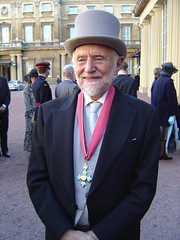 |
| Stanley Wells, Shakespearean scholar Creative Commons: Shakespeare Birthplace Trust |
Stanley Wells, who did, is the "Honorary President of Shakespeare Birthplace Trust." Dr. Burton mentioned that he unexpectedly discovered Wells had a twitter account in Dr. Burton's post on using twitter. I thought this would be a good place to start with using social media, so I created a twitter account (atRachelizo) and decided to follow Stanley Wells. I'm hopeful that as I can refine my questions about romance and fate playing a role in romance, I'll be able to contact him and ask him about more about the play.
Romance: Lovey-dovey or that other kind?
What does the word "romance" mean to you?
a. "a medieval narrative"
b. "a Spanish historical ballad"
c. "a fictitious narrative . . . in which . . . the events depicted are remote from everyday life"
d. "a romantic relationship"
(All definitions come from the OED)
Monday, March 4, 2013
My Life, a Tragedy
After my discussion with Dr. Burton about my midterm paper, I've been thinking more about a comparison between tragedy and romance. I read through my digital dialogue post about how I'd met with him, and realized that what we'd talked about was what role fate plays in a romance.
I feel like this is an intriguing question that can interest a variety of audiences, even those not familiar with certain literary terms; most people have a basic understanding of what a tragedy is. From my experience with social media, I've seen a lot of people who seem to look on life as a tragedy, and I'm interested as to their reasoning.
Liz made a comment on my post about that production of A Winter's Tale, Soviet-style, about the role of gods in a play where there were cosmonauts. She pointed out that if they had a belief in gods, the cosmonauts should have visited Apollo themselves instead of going to an oracle. This brings up the idea of the role of gods in the play, as well as the relationship of gods to fate, two ideas I'd like to explore further.
Do you think tragedy or the romance genre is
more true to life?
I feel like this is an intriguing question that can interest a variety of audiences, even those not familiar with certain literary terms; most people have a basic understanding of what a tragedy is. From my experience with social media, I've seen a lot of people who seem to look on life as a tragedy, and I'm interested as to their reasoning.
Liz made a comment on my post about that production of A Winter's Tale, Soviet-style, about the role of gods in a play where there were cosmonauts. She pointed out that if they had a belief in gods, the cosmonauts should have visited Apollo themselves instead of going to an oracle. This brings up the idea of the role of gods in the play, as well as the relationship of gods to fate, two ideas I'd like to explore further.
Subscribe to:
Posts (Atom)