Showing posts with label posted by Erin R. Show all posts

Wednesday, December 2, 2015

Annotated Bibliography

Title: Wherefore art thou, bae Romeo?

Thesis:
Because [Shakespeare’s] text is considered as some of the finest English work, changes to the text are widely discouraged. Modernizing the text is recent trend that has been growing as the millennial generation has begun discovering Shakespeare. When changes to the text with the intent of modernizing it occur, they are often critiqued as simplifying timeless classics for the lazy readers of today. However, I argue that 21st century adaptations of Shakespeare that translate the text into modern terms include our changing, growing millennial vocabulary, similar to Shakespeare’s invention and inclusion of many then-new words and phrases.

Delabastita, Dirk. There's a Double Tongue: An Investigation into the Translation of Shakespeare's Wordplay, with Special Reference to Hamlet. Atlanta: Rodopi, 1993. Print.

This book has helped me ground my argument that modernizing Shakespeare’s text with millennial vocabulary isn't as foreign as it sounds. Translating Shakespeare into other languages presents the dilemma— must the text sacrifice its poetic rhythm or pun-based wordplay in order to convey enough of the plot in the new language? Showing that translations of Shakespeare retain their universal appeal and value without retaining the exact language allows me to then argue that the millennial adaptations of Shakespeare’s text are no worse than translations into languages other than the original English.

Halio, Jay L. Romeo and Juliet: A Guide to the Play. Westport, Conn. [u.a.: Greenwood, 1998. Print.


I haven’t read this in its entirety, but I skimmed it in the library and decided this is a useful resource for my discussion of Romeo and Juliet. It discusses the changes between folios and the context for the play.

Hope, Jonathan. Shakespeare And Language : Reason, Eloquence And Artifice In The Renaissance. London: Arden Shakespeare, 2010. eBook Collection (EBSCOhost). Web. 2 Dec. 2015.

This book begins with a chapter discussing the conventions of language in the Renaissance and then follows up with a chapter about Shakespeare using that Renaissance language— gold for my paper! This will help me give context for Shakespeare’s flights of wit.

Hunt, Maurice. "Poetry vs. Plot in The Winter's Tale: Modernity and Morality in M. M. Mahood's Shakespeare's Wordplay." Connotations: A Journal for Critical Debate 6.1 (1996): 8-18. Print.

This article draws from a chapter in the book I skimmed, mentioned a citation below. I appreciated being able to read a condensed version of the argument and an extension of the wordplay discussion in regards to “The Winter’s Tale.” Though that won’t be the play I focus on primarily in my discussion, I will draw on some of the witty bits of information from this article to establish how much Shakespeare played around with English when writing these plays.

Mahood, M. M. "Romeo and Juliet." Shakespeare's Wordplay. 2nd ed. London: Routlege, 1958. 56-73. Print.


This entire book discusses Shakespeare’s innovative wordplay— puns, the creation of new words. I skimmed the beginning, but jumped straight to the Romeo and Juliet chapter because that it the play I’m using as the center of my paper since it’s the one that most people have come in contact with. It’s helping me demonstrate Shakespeare’s unprecedented wordplay (something we’re used to and attribute to him) in the hopes of later making the link that it’s just as radical as adapting his texts to the modern generation. With his wordplay, Shakespeare makes old stories and themes accessible to his generation, of all classes.

Monday, November 23, 2015

Millennial Shakespeare Mini Paper!

Shakespeare’s plays have been adapted thousands of times from generation to generation, each with updated settings, plot points, and concepts to mirror the values of the current society and critique social issues, as Shakespeare’s works did with Elizabethan England— setting Romeo and Juliet in Verona, California with mobsters; reversing the racial roles of Othello into an all-black cast with a white Othello; transforming Twelfth Night’s Viola from a shipwrecked girl working for a duke into a high school soccer player. While these updated adaptations offer unique insights into the cultures that produce them, they often draw their lines solely from the original text. Therefore, the changes these adaptations make to Shakespeare’s work focus on changing settings, music, and costumes; the emphasis is on the spectacle of theatre and film rather than on the text itself. However, there is a growing niche of Shakespeare adaptations in a variety of mediums that toy not just with elements of staging and production, but with the text as well. Because the text is considered as some of the finest English work, changes to the text are widely discouraged. Modernizing the text is recent trend that has been growing as the millennial generation has begun discovering Shakespeare. When changes to the text with the intent of modernizing it occur, they are often critiqued as simplifying timeless classics for the lazy readers of today. However, I argue that 21st century adaptations of Shakespeare that translate the text into modern terms include our changing, growing millennial vocabulary, similar to Shakespeare’s invention and inclusion of many then-new words and phrases.
First, I will examine Shakespeare’s infamous wordplay. He prolifically generated new words, compound words, and phrases that have become commonplace, traditional-sounding English words. We rarely trace them back to their origins nor realize how untoward the caliber and frequency of his new words. Understanding how Shakespeare “simultaneously mauled and energized [the English language] with such brilliance and such brio” allows us to the revolutionary aspect of such wordplay— never before had words been combined in such innovative ways (Prose 1).
Then I will explore the changing language of Shakespearean adaptations, both formal and informal. I plan on drawing parallels between current modernizing of the texts and Shakespeare’s original remixing of the English language and explaining that doing so is a tribute to Shakespeare’s wordplay rather than a desecration of the best English writing.
From there, I plan on explaining the impact of modernizing Shakespeare’s language and how it used in schools to make his works more interesting, accessible, and enjoyable for young adults. I plan on looking at Twitter and Facebook posts in the style of Shakespeare (particularly exchanges between Romeo and Juliet characters written by students as part of their high school projects), the YOLO Juliet project, Sassy Gay Friend, and Oregon’s Shakespeare Festival project to modernize five plays texts’ and perform them in 2016. As Aaron Scott explains about modernizing the text, “Playwright Kenneth Cavandar says that people came up to him after the world premiere of ‘Timon of Athens’ at the Alabama Shakespeare Festival in 2014 to say this was the first time they’d fully understood the Bard” (Scott 4).
Bibliography
Benet, William Rose. “William Shakespeare.” Benét's Reader's Encyclopedia. 3rd ed. New York: Harper & Row, 1987. Print.
Mabillard, Amanda. “Why Study Shakespeare? The Reasons Behind Shakespeare's Influence and Popularity.” Shakespeare Online. 20 Aug. 2000. Web. 23 Nov. 2015.
Prose, Francine. “‘Everything Is Illuminated’: Back in the Totally Awesome U.S.S.R.” New York Times. The New York Times Company, 14 Apr. 2002. Web. 23 Nov. 2015.

Scott, Aaron. “Oregon Shakespeare Festival To Modernize Shakespeare's Canon.” OPB News. Oregon Public Broadcasting, 28 Sept. 2015. Web. 23 Nov. 2015.

Tuesday, November 17, 2015

5 Shocking Claims about Modernizing Shakespeare from ThoughtCatalog (presented by Buzzfeed)

I'm aware this is rough-- I'm still trying to narrow down my topic but I think this exercise helped me do that a little bit!

  1. Causal: Because Shakespeare's social commentary on Elizabethan England, as found in his plays, is valued centuries after its original performances, it have inspired several generations to adapt his works to reflect the modern day while still using them as a vehicle to comment on current social issues.
  2. Policy: Although Shakespeare's plays remains culturally relevant in their original forms, adapting the original texts to reflect current culture should be encouraged because provides new ways for the same universal themes to reach a new generational audience.
  3. Definition: Adapting Shakespeare's plays pays homage to the playwright who borrowed storylines from classical works.
  4. Evaluation: Altering Shakespeare's works to fit the eras it is adapted in is equally valuable as the original texts because it provides new opportunities to mirror the values of the current society and critique social issues (as Shakespeare's works did with Elizabethan England).
  5. Comparison: Shakespeare's plays have been adapted generation after generation, from West Side Story to She's the Man, with updated plot points and language to reflect the era. 21st century adaptations of Shakespeare that translate the text into modern terms include our changing, growing millennial vocabulary; that is similar to Shakespeare's invention and inclusion of many then-new words and phrases.

Sunday, November 8, 2015

Beauty and Belief Symposium

I attended the same session of Beauty and Belief as Sarai did-- the 12:30 panel on Friday. The third speaker, John Bennion, addressed a topic that fascinated me: the Mormon view that literary aesthetics of beauty cannot exist with faith. To clarify, he explained that in the larger world of literature, Mormonism isn't a subject that publishers are interested in reading about. However, in the Mormon community, realist writing that doesn't fit with a small, faith-promoting window isn't accepted, either. Our Mormon culture balks at realism, at Mormonism-related writing that doesn't have redemptive endings or that expresses some doubts (even if there is a tidy resolution). He explained that good literature makes you think-- it has an edge of danger that allows you to challenge what you know and grow from that challenging. While that aspect of literature is prized in other genres, it is not welcome in Mormon literature. He explained that non-LDS writers with LDS backgrounds were accepted in Mormon communities until they published complex analyses of that culture, analyses that weren't written antagonistically but didn't peer through rose colored glasses either.

I've noticed this attitude, both in writing about Mormonism as well as in the LDS community's discourse, and it frustrates me SO much. Wallace Stegner, a brilliant Utahn who wrote one of the most accurate portrayals of the Mormon migration, treated the subject of the pioneers with respect and never mocked their beliefs after stating in the introduction of The Gathering of Zion that he didn't believe in their revelations. Because he doesn't feel the need to gloss over the earthier moments of the Mormon migration as many LDS writers do in an effort to shield the early Church from additional criticism, Stegner is able to provide a kind, accurate portrayal of an incredible society without pretending that they didn't have human faults of their own. My family and I appreciate that. However, some students in my Utah history class were offended that Stegner mentioned that Brigham Young swore, or that he brought up tensions between the Mormon community's beliefs and practices. It bothered me to see that they could be so close-minded and unwilling to confront the humanity of early Church members (who we too often whitewash and deify).

The Mormon community is also not very accepting of doubt, whether it's expressed in literature or in other forums. However, I love the concept that a few General Authorities have brought up in the most recent conferences-- that it's normal to have doubts and that thinking through these doubts while clinging to one's faith is okay. As Bennion suggested in his presentation, we need to be comfortable with the realism of doubt and struggles, with the understanding that while those are very real things we will confront in life, our faith does not have to be weakened by them, but can be made stronger.

Thursday, November 5, 2015

Annotated Bibliography

1. William Rose, Benet. "William Shakespeare." Benét's Reader's Encyclopedia. 3rd ed. New York: Harper & Row, 1987. Print.
library
The entry on Shakespeare explained that many of Shakespeare's plays and poems have been heavily inspired by classical works like Ovid and Seneca. Even though he's viewed as the peak of creativity and hailed as the best English writer, Shakespeare was doing to old works what millennial are doing to his works today-- remixing them, modernizing them.

2. "Twelfth Night." Shakespearean Criticism. Ed. Michelle Lee. 3rd ed. Vol. 34. Farmington Hills: Cengage Gale, 2001. Print.
library
In the introduction of the Twelfth Night volume, Shakespeare's influence by classical works is further established. He's always touted as a man of original content, but draws so much inspiration and plot points from others' works! I also learned that Twelfth Night is a good play to look at if I'm studying millennial application of gender issues in Shakespeare.

3. Bowers, Fresno. "William Shakespeare." Dictionary of Literary Biography: Elizabethan Dramatists. Vol. 62. Detroit: Gale Research, 1987. Print.
library
The Shakespeare entry helped me situate where Twelfth Night (and several other works) fall in the timeline of Shakespeare's career. It also has provided a bit of context for the creation of each play, especially listing the source material from which Shakespeare drew. This will be helpful as I frame my paper with the idea that Shakespeare himself approves of adapting to fit one's era.

4. Shakespeare-online.com, especially Mabillard, Amanda. Why Study Shakespeare? Shakespeare Online. 20 Aug. 2000.
website
The section "Why Study Shakespeare?" in particular helped me pinpoint what exactly about Shakespeare's works have universal appeal enough for them to remain relevant in our modern day. (It also listed some excellent modern adaptations of his works to look into.)

5. "A-Z Guide to Shakespeare: Twelfth Night." Oxford Reference. Web. 3 Nov. 2015.
website
After reading sources that explained that a lot of Shakespeare's works were inspired or loosely based off other works and legends, I was excited to find out what he used for inspiration when working with Twelfth Night. This entry provided background material specifically about this play such as performance notes and timelines-- very useful information!

Sunday, November 1, 2015

Much Ado about having to memorize 50 lines on top of writing a paper

Like a few others, I'm performing Act 2, Scene 3 (and 4) from Much Ado About Nothing. I'll play Claudio and Beatrice. We haven't cut our lines down to approximately 50 each, but my lines will be from the following sets:

CLAUDIO
Yea, my good lord. How still the evening is,
As hush'd on purpose to grace harmony!
CLAUDIO
O, very well, my lord: the music ended,
We'll fit the kid-fox with a pennyworth.
CLAUDIO
O, ay: stalk on. stalk on; the fowl sits. I did
never think that lady would have loved any man.
CLAUDIO
Faith, like enough.
CLAUDIO
Bait the hook well; this fish will bite.
CLAUDIO
She did, indeed.
CLAUDIO
He hath ta'en the infection: hold it up.
CLAUDIO
'Tis true, indeed; so your daughter says: 'Shall
I,' says she, 'that have so oft encountered him
with scorn, write to him that I love him?'
CLAUDIO
Now you talk of a sheet of paper, I remember a
pretty jest your daughter told us of.
CLAUDIO
That.
CLAUDIO
Then down upon her knees she falls, weeps, sobs,
beats her heart, tears her hair, prays, curses; 'O
sweet Benedick! God give me patience!'
CLAUDIO
To what end? He would make but a sport of it and
torment the poor lady worse.
CLAUDIO
And she is exceeding wise.

CLAUDIO

Hero thinks surely she will die; for she says she
will die, if he love her not, and she will die, ere
she make her love known, and she will die, if he woo
her, rather than she will bate one breath of her
accustomed crossness.
CLAUDIO
He is a very proper man.
CLAUDIO
Before God! and, in my mind, very wise.
CLAUDIO
And I take him to be valiant.
CLAUDIO
Never tell him, my lord: let her wear it out with
good counsel.

CLAUDIO
If he do not dote on her upon this, I will never
trust my expectation.
BEATRICE
Against my will I am sent to bid you come in to dinner.

BEATRICE

I took no more pains for those thanks than you take
pains to thank me: if it had been painful, I would
not have come.
BEATRICE
Yea, just so much as you may take upon a knife's
point and choke a daw withal. You have no stomach,
signior: fare you well.

Tuesday, October 27, 2015

Viola's the Man

My paper is still going to focus on the millennial generation's influence on Shakespeare. The reason I chose to read Twelfth Night was so that I could better understand one of pop culture's finest Shakespearean twists-- She's The Man. Now that I understand the work that inspired the movie, I plan on rewatching it in order to pick out specifics of how modernity remixed Shakespeare into something even just as culturally relevant, albeit for a younger audience, as the original. (I may read Taming of the Shrew if I have time, too, so that I can also include 10 Things I Hate About You.

One concept that Twelfth Night plays with is gender. Much of the humor comes from characters mixing up their genders or overstepping the boundaries of their sex. However, gender roles are not just laughed at, but legitimately blurred. (Think Orsino liking Viola's Cesario disguise even once he finds out she's a woman.) I'd like to look up recent papers discussing gender conflicts in Twelfth Night and see if any commentary has been made that connects the gender issues of Shakespeare's Illyria with current LGBTQA gender and sexuality issues.

The idea that clothes determine who you are (Viola dressed as a man making her a man, etc.) is something that holds weight in the millennial generation today. I'd also like to see if that's a theme that carries weight in modern twists on Shakespeare. It's definitely relevant today.

Sunday, October 25, 2015

To quote or not to quote, that is the question (not Hamlet, but it fits)

Here are a few quotes that stood out to me as I read Acts II and III of Twelfth Night:


  1. In Act II, Viola exclaims, "O time! thou must untangle this, not I; It is too hard a knot for me to untie!" This idea of time clearing up all confusions or injustices shows up again and again in Shakespeare's works. Ultimately, some characters just decide to go with the flow and let fate figure everything out because Fate was considered to dictate how events played out. (This attitude definitely shows up in Winter's Tale and Midsummer Night's Dream!)
  2. Sir Toby greets Feste who comes in to perform by saying, "Welcome, ass." Such a succinct way to showcase Toby's incompetence-- by calling a person such a name, Sir Toby only makes himself sound like one. His nobility is the only reason no one's calling it out, though! Anyway, that's the one sentence that gives the rest of you an understanding of his character without reading the play.
  3. Viola makes an excellent analysis of Feste in particular, but of the fool trope that shows up in many of Shakespeare's plays (Rosemary, you may want to look at this quote for your research!): "This fellow is wise enough to play the fool,And to do that well craves a kind of wit. He must observe their mood on whom he jests, The quality of persons, and the time, And, like the haggard, check at every feather That comes before his eye. This is a practise As full of labor as a wise man’s art, For folly that he wisely shows is fit. But wise men, folly-fall'n, quite taint their wit."

Sunday, October 18, 2015

A Midsummer Night's Rave

I saved this article a few weeks ago-- the idea of modernizing Shakespeare so that he's accessible to a new generation intrigues me. One can argue that Shakespeare will always be relevant in his purest forms (and I do fall in that camp) but I love watching the permutations of Shakespeare throughout pop culture-- not just adaptations of Shakespeare with popular actors (cough, Mel Gibson, cough), but ways that Shakespeare is tweaked to intrigue new generations or to mirror their values. Right now, creating social media interactions between Othello and Desdemona or condensing Romeo and Juliet into one IM conversation allows Shakespeare's plays to become accessible and more relatable to teenagers in a way that the old English can't be. I want to explore how Shakespeare reflects different generations based on when it's produced or remixed (or mauled), with an emphasis on the Millenials' influence on his works.

I'll probably read Twelfth Night, As You Like It, All's Well That Ends Well or Taming of the Shrew.

Wednesday, October 14, 2015

Redeemed by works, not just by grace

We've been talking about the redemption for a variety of characters toward the end of the play, specifically for Lear. What made the idea of redemption for Lear real to me are his actions, not his words. (Well, some of his words detail his actions. But it's the actions-- not the talking about it-- that demonstrates an attempt to atone for his wrongs and those changes ultimately bring about a sort of redemption for him.) As he drags Cordelia's body onstage, he declares, "I kill'd the slave that was a-hanging thee." What a contrast to the first act of the play, where he kicks Cordelia out of his house and withholds her third of his kingdom because he does not feel that she properly flattered him. He is the one wronging Cordelia. Now, as someone tries to wrong her by killing her, Lear does not simply protest their wrongdoing but enacts vengeance upon the slave for trying to wrong his daughter. He protects her from unrighteous judgment even though months before, he was the one passing unrighteous judgment upon her. This demonstrates a repentance, an understanding that he wronged her and a willingness to make it up to her tenfold. So when Lear whimpers, "She lives! if it be so, it is a chance which does redeem all sorrows that I have ever felt," he believes that his acts of protecting her against the first hangman and carrying her body to safety have made up for the sorrows he inflicted upon himself by treating her badly at the beginning of the play and pursuing flattery rather than truth. In a way, it's almost lovely that Lear dies thinking that Cordelia revived. He believes that he was ultimately able to save his child.

Monday, October 12, 2015

Missing Madness

From what I can gather, familial ties were very important during Shakespeare's time-- they governed much of the social interactions of the day. It's slightly appalling, then, to watch Goneril and Regan (as well as Edmund) turn on their fathers for titles and wealth. This betrayal ultimately drives Lear (and in some ways, Gloucester) mad. As I explored the backstory of the play using the Shakespeare Oxford Reference, I was reminded that Shakespeare loosely based the script off of existing stories, histories, and plays about the same king. Though he based Lear off of an existing storyline, he added one more element to the play that was historically incorrect-- Lear's descent into madness. Historically and in earlier representations of the story, Lear doesn't go mad! But that's one of the main focuses of Shakespeare's play-- how family betrayal can set a man mad. Why did he characterize Lear as a madman? Perhaps his descent into madness, especially evident in Acts 3 and 4, demonstrates how grotesque Goneril and Regan's betrayal is because it's committed against family. Because he has vested his daughters with the power of his kingdom, Lear gives them a sort of parental control over him and steps into the role of a child (further emphasized by his association with the fool and Tom/Edgar).  His return to almost childlike behaviors-- erratically cursing the weather, blaming the people surrounding him, whining about his daughters' abuse-- highlights their unnatural turning upon the man who raised them. 

Tuesday, October 6, 2015

Sisterly Love

First off, this play is my jam. One of my favorite dynamics in the show is the relationships between Lear's daughters. I secretly delight in how cunning and terrible Goneril and Regan are, but they're also *cue Jean Ralphio* the woooorst. As I reread Act 1, I admired Cordelia's grace in the face of complete humiliation at her father's hands in front of court. Her unwillingness to pander to her father's ego and choice to refrain from criticizing her father in front of his family and advisors demonstrates her love for him. Acting as foils to Cordelia's behavior, Goneril and Regan gloat about their success over their sister in acquiring large parts of their father's kingdom, discussing their father's degeneration in a manner that suggests they care little for his actual health and more for the power they obtain as he grows older and sicker. Their flattery, when compared to Cordelia's plain speech, sounds all the more false. Because of his their  ill-concealed self-interest, I don't feel that bad on when Goneril and Regan mistreat Lear because he heard what he wanted to hear even though he knew Cordelia was a much more devoted daughter.

Tuesday, September 29, 2015

Apollo: A crash course on why Leontes isn't the sharpest crayon in the box

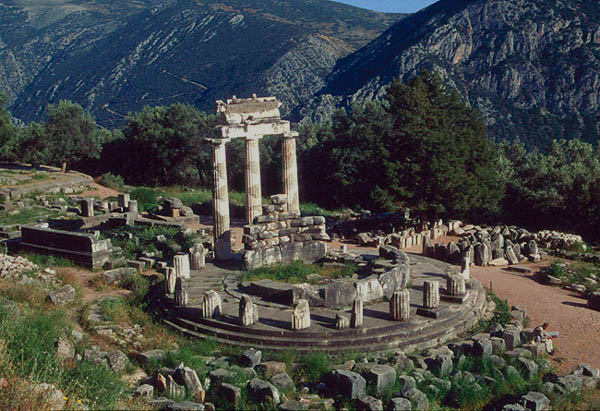
As I've mentioned in class before, I'm taking an awesome mythology class this semester! One of the biggest benefits from it is that I notice more classical allusions and the influence of mythology on basically all of literature. So I was intrigued-- shocked, appalled-- at Leontes' reaction to the Oracle of Delphi's response to his accusations. In ancient Greece, it was common for nobles and peasants alike to bring their questions to Apollo's prophetess at Delphi, the Pythia. She would answer their questions, personal or communal, and those answers were received and acted upon with respect because she spoke for Apollo. It's similar to how we treat personal revelation in Mormonism-- whatever divine guidance we receive, we typically treasure and act accordingly. Understanding this allowed me to understand how irrational and out of line Leontes' response was when he disliked the Oracle's content. You don't just declare that divine advice is wrong (especially if you believe in Apollo and know of his wrathful nature)! It's not a Magic 8 ball that you can shake over and over again until you get the answer you want, even if you are royalty. Dismissing it as "mere falsehood" demonstrates Leontes' jealousy (WAY out of control, even if you're trying to sympathize with him...) and the sense of entitlement that comes with kingship (remember Richard and how he expected his subjects' adoration and support, regardless of his actions? It sounds like Leontes isn't used to hearing the word no, either).

However, Leontes quickly changes his tune and fears his blasphemy when his wife and son die. He begins to believe the oracle's contents once he attributes these deaths to Apollo's anger. This fear talks reason into his jealousy, but it's too late! Turns out that it's probably wiser to listen to divine advice, even if you're ruling with divine authority...

Sunday, September 27, 2015

Still addicted to cheese: is there a support group for that?

The grilled cheese is a gift from gods on high,
A monument to storms so blustery.
I curl up, watch the rain droplets pass by
And munch on mozzarella buttery.

Best friends with soup, the grilled cheese likes to swim—
Some lentil, chicken noodle, or potato.
With beans and broccoli my bowl does brim,
But I like grilled cheese most dipped in tomato.

Though perfect in a chilly thunderstorm
Or as the end to worn out sleepy days,
This sandwich is not fit for summers warm;
I much prefer a juicy fruit buffet.

While strawberries are sweet and apples tart,
Grilled cheese will always stay close to my heart.

I mostly focused on fixing the meter that was off by fixing words that either didn't fit the stress pattern or sounded too forced in order to fit the stress pattern. Also, I tried to keep a healthy balance of enjambment in the sonnet.

P.S. This is the grilled cheese maker my husband and I received as a wedding present. It's pretty snazzy!

Tuesday, September 22, 2015

Confessions of a Cheese Addict

At first I was stuck finding a worthy topic to venerate. In preparation, I read some of Professor Burton's sonnets under the "humorous" category. Doing so helped me realize I didn't have to write some lofty ode to the lovely Wasatch mountains or to my snazzy husband... I could write it about something just as glorious but more mundane.


The grilled cheese is a gift from gods on high,
A monument to cold days, long and rainy.
I curl up, watch the rain droplets pass by
And munch on mozzarella burnt yet creamy.

Best friends with soup, the grilled cheese likes to swim—
Lentil, chicken noodle, or potato.
With beans and broccoli my bowl does brim,
But I like grilled cheese most dipped in tomato.

Though perfect in a chilly thunderstorm
Or as the end to worn out sleepy days,
This sandwich is not fit for summers warm
I much prefer a juicy fruit buffet.

While strawberries are sweet and mangoes tart,

Grilled cheese will always stay close to my heart.


I like my sonnet because I like grilled cheese. Though the sonnet itself is not perfect, the subject material is, so that kind of irons out any wrinkles that exist. As Nephi says, overlook my writing's faults without judging the subject of my writing. (Okay, if I must admit, I felt I was forcing the volta.)

Sunday, September 20, 2015

Titania and Oberon: Power Struggle or Prank War?

This weekend, I watched both the Rice production and the 1964 film of A Midsummer Night's Dream. The dynamics between Titania and Oberon, particularly in Act X, Scene X, presented differing opinions on the couple. In the Rice stage show, Titania maintains a subtly charming air when she interacts with Oberon; she flirts with him, she pouts at him, she stomps her feet, but does all of that in a charming, familiar manner. She plays on Oberon's sympathies with melodramatic scolding, an attempt to persuade him to end the conflict and set nature right again for the benefit of those in the woods around them. She suggestively offers him a chance to join her and her fairies as they dance if only he concedes. But when he refuses her demands, Titania leaves and the fairies follow their queen. It's clear who has the upper hand when she departs because of the tones she adopts during this scene. In comparison to Titania, Oberon seems bored with the conflict, worn out but unwilling to give up so easily. When he unfolds his scheme to Puck, he displays a similar charisma that Titania exercised on him moments before. Oberon's tone suggests he does not feel particularly malicious towards Titania, but that he just wants to reconcile without giving in so he doesn't look weak in the fairies' sight. As he conspires with Puck, his mischievous nature makes the plot seem like something concocted by two tricksy middle school boys. This tone sheds light on Oberon and Titania's relationship: they are locked in a game, not a war!


However, this fantastical relationship is portrayed quite differently in the 1964 movie. At the beginning of the same scene, Titania dances with the changeling boy-- the center of the conflict. That brief interaction establishes their close relationship, one of a mother and son. Her unwillingness to give him up is justified by this interaction. When they run into Oberon, the tone of the scene changes. No one frolics; they freeze. Titania looks horrified; Oberon looks angry. The music drops ominously. Clearly, the two are locked in a not-so-friendly conflict. In this adaptation, Oberon uses a commanding tone in order to establish his dominance here. Titania plays her role with the knowledge she is defying her husband and king, and yet cares enough for the changeling that she is willing to stand against his wishes. Unlike the almost sheepish Oberon in the Rice production who simply wants the conflict to end (and kind of enjoys the seductive element of the argument), this Oberon refuses to look at his wife or acknowledge her interest in the halfling. She cares about the boy, not a larger game or a power struggle, but to Oberon, her defiance exhibits a struggle for his power. Because of this characterization, his love potion plot is less about resolving the conflict or amusing himself and Puck, but is about regaining control and enacting revenge. Oberon's manipulative behavior because of Titania's genuine interest in the boy paint their relationship as a subservient, traditional marriage rather than a match of intellectual equals playing games to amuse and seduce each other.

Wednesday, September 16, 2015

Pettiness: Not Just For Humans

After our class discussion, I was interested in looking over A Midsummer Night's Dream with an eye attuned to the "darker elements" present, especially in conjunction with the fairies. Using the library's Shakespeare guide as a starting point, I stumbled onto an article discussing just that. For the most part, it expounded on things we had touched upon in class (darkness being a central part of the fairies' world), but then it made a fascinating connection: though the fairies follow the dark "like a dream" (V.i.393), they are anthropomorphized to exhibit human pettiness. Puck's sense of superiority to the mortals in the woods shows up a few times in the play. Oberon and Titania's relationship is portrayed like the common trope of jealousy, petty squabbles, and the nagging wife who ultimately submits to her much more knowledgable, rational husband. (Eew. Typing that made my fingers weep. But you get the point.) Though the fairies are portrayed as the wild, natural creatures, they are subject to a similar ordering of the world as the lovers are: a world where males reign supreme. These parallels with the human world take the fear out of the untamed natural world the fairies dominate. It allows the audiences of Shakespeare's day to even identify with the supernatural instead of being scared of its foreignness.


Sunday, September 13, 2015

Pyramus and Juliet

To me, Midsummer's isn't one of Shakespeare's funniest comedies, but it does contain what I consider to be some of Shakespeare's finest humor: "Pyramus and Thisbe." The storyline mocks Romeo and Juliet, demonstrating Shakespeare's genius in writing both comedy and tragedy. His ability to dramatize essentially the same story in two different tones showcases his talent. Sources disagree on which play was written and performed first, but one can assume that many theatergoers saw the two shows and noticed the parallels. The text itself sets the tone for the story; the asides between the royal audience members during "Pyramus" provides the bulk of the scene's humor. Even if the play within a play was played seriously, the court's quips poke fun of the popular tragic archetypes of the day. Do you guys think that Shakespeare's burlesque of "Pyramus" makes up for our high school sufferings from Romeo and Juliet?

Fun fact: According to the awesome Oxford Reference, Shakespeare drew some inspiration for A Midsummer's Night Dream from Chaucer's Knight's Tale.

Fun fact 2: Disney adapted the play into a short Mickey Mouse cartoon! (Here's a link to part 1! I can't find part 2, but anything with Donald Duck is worth the watch.)


Sunday, September 6, 2015

What Goes Around Comes Around

Seeing Richard II performed allowed me to pay attention to the interactions between the characters rather than just the words they speak; it put the characters in context of their relationships with one another. The two interactions that stood out to me the most were those between Richard and Mowbray at the beginning of the play, and Richard and Bolingbroke near the end. Richard, who has turned a blind eye to Gloucester’s murder (if not requested it), is forced to banish Mowbray in order to maintain a facade of justice. Mowbray, who acted under royal condonation, now faces condemnation that he cannot argue against without committing treason— merely suggesting that the king okayed the murder is a crime greater than killing a duke. If he claimed that Richard turned on him by banishing him, Mowbray would die— not only from admitting guilt, but from accusing Richard of plotting with him. So he is backed into a corner, banished by his inability to refute his sentence. As the play progresses, Bolingbroke is added to the list of Richard’s victims when his inheritance is usurped by the throne.


Richard’s final interaction with Bolingbroke parallels his interactions with Mowbray in the first act. When Richard’s title is stripped from him, he becomes powerless to speak out against the crown, just as Mowbray is, because doing so is treason. Richard’s land and goods are usurped while his back is turned, just as he stripped Bolingbroke from his inheritance. He is then covertly murdered in prison, with the intent of ridding the new king of a political threat, just as he had allowed Gloucester to die. Depicting Richard’s sins being visited upon his head in like kind shows that though he was king with a supposed divine authority backing his kingship, he is not exempt from divine punishment.

Wednesday, September 2, 2015

"All In Vain Comes Counsel to His Ears"

I was intrigued by Richard's unwillingness to follow others' counsel and by the impact that behavior had on his subjects who witness it. This unwillingness to heed criticism from his counselors and friends stems from his belief that he is infallible as king because of his divine appointment. When Bolingbroke makes a public stand against him, Richard declares that "my master, God omnipotent, is mustering his clouds on our behalf . . . and they shall strike" those who rise up against the crown.

However, this belief that monarchs are selected and sustained by God does not placate all of Richard's subjects; fed up with his poor ruling, they embrace Bolingbroke as an honorable contender to Richard's judgments. By honorable contender, I mean that Bolingbroke's claim to his father's estate is valid. However, monarchs over the ages have taken what they want without regard to proper ownership, and their claims have often gone unchallenged. Why then is Richard being challenged on this particular count of corruption? Why is the usurped land not chalked up to a perk of his divine authority?

I believe that Richard's unwillingness to listen to outside advice or requests allows him to be deposed from the throne. Placing the utmost faith in his own judgments because of his divine appointment, Richard ignores Gaunt's warning to seek honest, not flattering tongues to avoid driving England into ruin. He also ignores Bolingbroke's pleas for the assets that are rightfully his, a move that paints him as a tyrant in the public's eye. Even his once-devoted subjects like York abandon him once they realize the king is deaf, "stopp'd with other flattering sounds." Though divine authority is a compelling reason to follow a ruler, it cannot satisfy a country looking for a leader to put its best interests at heart.