Showing posts with label posted by Rosemary L. Show all posts

Tuesday, December 1, 2015

Annotated Bib 2.0: Shakespeare's Fool as Rhetorical Device


Title: “Almost at times, the Fool”: Shakespeare’s Fool as a Rhetorical Device in Modern Television

Thesis: Shakespeare's professional fools, while serving particular commentary on and perspective for characters in the original plays, have evolved to become prolific rhetorical devices within a fictional world by maintaining truthfulness, interpreting unfamiliar in-world norms, and remaining distinct from set cultural norms in order to bridge any disconnect between a TV series and its audience.

Cuthbertson, Thomas H. The Fool’s Replies: Toward a Poetics of Folly in Shakespeare’s Comedies. Diss. Indiana University, 2014. ProQuest: 3613685. Print.
While this might be the longest .pdf on the planet, it does directly speak to the unique role of Feste as immune to social hierarchies within Twelfth Night. Freedom from social constraints is one of the easy identifiers for entertainment Fools.

Gunn, Giles. “American Literature and the Imagination of Otherness.” Journal of Religious Ethics 3.2 (Fall, 1975): 193–215. JSTOR. Web. 25 November 2015. <http://www.jstor.org/stable/40014895>

Giles Gunn explores how developing ideas of otherness throughout American history shaped American fiction. Since one of my criteria for a Fool requires a sense of otherness, I’m using Gunn’s essay as a base point for how otherness is defined in American culture.


Jensen, Nettie. “Feste and Lear’s Fool: Different Genres, Same Function.” This Rough Magic 1.1 (January, 2010): 115–125. Print. 
Nettie Jensen discusses the shared role of Fools as truth tellers. I find this a consistent attribute in modern Fools, so being able to have scholarly support on which to base my conclusions is vital.

Meyer, Russell J. “Fools and Fool-Makers: Types of Comic Characters in Renaissance Literature.” Journal of Rocky Mountain Medieval and Renaissance Association 1 (1980): 39–46. Print.
Meyer breaks down the four categories of Fool in Shakespeare’s plays, distinguishing “natural” fools from “professional” fools. Instead of delving into disparate versions of Shakespeare’s fool, I get to piggyback off of Meyer’s work! This article provides really useful categorization.
Porter, Lynnette. Tarnished Heroes, Charming Villains and Modern Monsters: Science Fiction in Shades of Gray on 21st Century Television. Jefferson: McFarland Publishers, 2010.
Porter explores the shifting paradigm of morality in modern sci-fi television and how it reflects evolving cultural reactions to unprecedented shifts in ethics. I've found that Porter's reasoning behind shifting morals in contemporary entertainment provides an excellent frame for my discussion.

Monday, November 23, 2015

"And at times, the fool"

Rosemary Larkin
Professor Gideon Burton
English 382
23 November 2015
“And at times the fool”: Shakespeare’s Fool in Modern Media
The trope of the Fool is consistently used throughout Shakespeare’s work to fill many roles: comedian, counselor, commentator. Scholarship regarding the Fool is further complicated by the agreed upon divisions within the trope, specifically differentiating between a “natural fool” and a “professional fool.” The professional fool specifically has developed into a rhetorical device integral to the audience’s interpretation of themes, characters, and particularly moral systems within the story. “Most of these figures, including Feste in Twelfth Night and Lavatch in All's Well That Ends Well, are professionals who are consciously wiser than the jesting roles they adopt[. . . .] All of them see and describe the plays' events in meaningful ways that are not available in normal social discourse” (Wiggins). Although superficially different from its Shakespearean origins, the professional fool’s manifestations in modern media have exploded into a cross-genre trope which interfaces with the audience in order to accommodate disparate social spheres and resolve conflicts arising from clashing moral systems.
Defining a Fool
Shakespeare’s comedies and tragedies distinguish between two general roles for the Fool exists, and each tends to be accentuated the respective genres. Tragedies use the fool as a moral foil for the self-centric and poor judgment of title characters. Comedies fixate on the social classes as does their Fool: rather than latching to a specific character, the Fool can step in and out of the social order, interact with any character, be accepted in any venue. Additionally, the Fool exempt from social niceties, making their commentaries and explanations objective and trustworthy. A Fool is fundamentally defined by being trustworthy. In moral situations, the Fool advocates for the audience. Not that the Fool imposes the audience’s moral system onto the story, but that the Fool acts as intermediary for the audience to accept without condoning the morality of the protagonist. Especially in modern media, inherent moral systems vary wildly and often conflict with the accepted social contract or regional morality. The Fool is then responsible for expressing those concerns in any number of ways, the most consistent and common being truthfulness. Genuine honest reaction to things anchors the audience to the worldview of the protagonist. Fundamentally, the Fool is defined by its relation to the protagonist, although modern media does develop the character of and stories for the Fool in order to evolve the trope with the evolution of characters, especially since serialized media in particular is slow to develop primary plot elements and as such compensates with a well developed supporting cast. Still, there are core characteristics that contemporary fools share with Shakespearean ones.
I will break down the prevailing attributes all Fools share, focusing on 5 that are consistently supported in Shakespeare’s professional fools (hopefully being able to reconcile with natural fools as well).
Next, I wish to focus on attributes that are common but not necessarily mandatory. Ideally, the versatility of these characteristics will lead into a sketch of the modern fool.
Since so many modern interpretations meld professionals and naturals, mental illness is often used to exempt potential fools from social niceties and account for often superhuman exaggerations to their social standing, their breadth of knowledge, and their often unique sense of humor. Humor is possibly the most problematic aspect of defining a modern fool as “foolishness” does not necessarily overlap with the purpose of a fool within the story and world. We need to be careful of combining the fool with a sidekick, especially when comedic characters and generally clueless ones tend to be audience favorites.


Shakespearean Fools
Mercutio from Romeo and Juliet
Puck vs. Bottom from A Midsummer Night’s Dream
Feste from Twelfth Night
Touchstone from As You Like It
Clown from King Lear
Polonius from Hamlet


Contemporary Fools
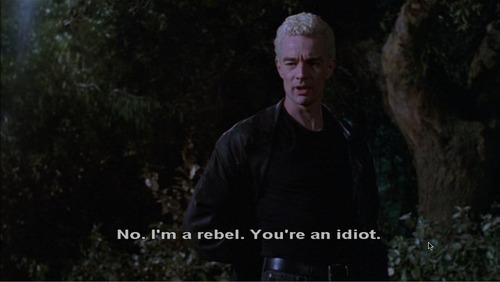
Cordelia/Spike from Buffy the Vampire Slayer
Comedian from Watchmen
Wit from The Stormlight Archive
Barney Stinson from How I Met Your Mother
Charlie Young from The West Wing
Parker from Leverage
Jayne/River from Firefly
Hoenheim from Fullmetal Alchemist: Brotherhood
The Doctor from Doctor Who
Marty from Cabin in the Woods
Kiskue Urahara from Bleach
Kramer from Seinfeld


Works Cited
  1. Wiggins, Martin. "Fools." The Oxford Companion to Shakespeare. Oxford: Oxford UP, 2001. 21 November 2015. Web.
  2. Astington, John H. “Three Shakespearean prints.” Shakespeare Quarterly: Summer 1996: 47, 2: ProQuest Research Library. 178. Web.

Tuesday, November 17, 2015

The Fool with the Power: 5 Thesis Statements


1. Policy: The Fool is often relegated to comedic relief in one of Shakespeare's plays, but its role is not only morally complex but has also inspired a modern counterpart that pulls an audience into world defined by an alien moral system.

2. Definition: The Fool, a recurring characterization throughout Shakespeare's comedies and tragedies, is not merely a manifestation of major characters' unacknowledged consciousness; in fact, the Fool primarily serves as an objective if cryptic counterpart to the humanity embodied within characters.

3. Comparison: Joss Whedon has resurrected Shakespeare's Fool; however, while the traditional Fool served to connect characters within a work to the audience's perception of them, Whedon's trope pulls the audience into the moral scale of the work.

4. Evaluation: Although the Fool serves similar purposes across genres as a mouthpiece of truth, Shakespeare's comedies and tragedies distinguish between a Moral Fool who provides guidance and a Societal Fool who observes societal hypocrisy.

5. Causal: Although the role of the Fool was simple enough to be ubiquitously known during Shakespeare's era, its manifestations in modern entertainment have exploded to accommodate disparate social spheres and mutable moral standards.

Monday, November 9, 2015

Galway Kinnell, a 20th Century Romantic

Galway Kinnell is a recent favorite of mine. When I saw that Professor Trott from Emerson College was presenting at the Beauty and Belief Conference regarding Kinnell, I was thrilled. “Images of Beauty and Transcendence in Galway Kinnell’s Body Rags” by Professor Trott looked at the theme of beauty throughout Body Rags, one of Kinnell's seminal works.

Trott focused on the clash between traditional ideas of beauty and the developing 20th century. As Trott spoke, I began to see clear connections to the Romantics. Kinnell struggled to define beauty, and I think that struggle resonates with most of us. It's difficult to prioritize what matters, to sift through the distractions to find something that inspires. The gospel can give us clarification, I believe, but conscious choices of where to put our energies has such influence on those we encounter. I can't wait to reread Galways Kinnell's work with a difference framework.

Wednesday, November 4, 2015

Annotated Bib

 My focus has been on Shakespeare's fool trope and how it carries into modern day media. However, as I researched, I became aware of the significant differences between the trope in a comedy like Twelfth Night and a tragedy like King Lear. I've refocused my research to that and hope to incorporate a modern media element, but the looser focus might turn up something interesting.

1. Adams, Jennifer. Y Is for Yorick. 1st ed. Layton: Gibbs Smith, 2011.  Print. 

I was given this book as a Christmas gift a few years ago. It's a fun and at times insightful alphabet book about characters from various Shakespeare plays. As I've been drawn to Twelfth Night, I've noted the 2-page summary in the back. Additionally, I explored characters from Twelfth Night, King Lear, and As You Like It, all of which use the fool trope differently but I still believe for the same end.

2. Shakespeare, William. The Norton Shakespeare: Based on the Oxford Edition. Ed. Stephen Greenblatt. 1st ed. New York: W.W. Norton, 1997. Print.

This is my personal Shakespeare anthology I've had for almost 10 years. There are many short summaries at the beginning that set a framework for Shakespearean society, and reading through some of those made me thing about the contrasting roles of the fool in comedies versus tragedies. If possible, I'd like to incorporate that into my research.

3. Boyce, Charles, and David Allen White. Shakespeare A to Z: The Essential Reference to His Plays, His Poems, His Life and Times, and More. New York: Facts on File, 1990. Print.

Jessica (I believe) mentioned this book in class, so I found the reference copy in the HBLL and flipped through it. There are 5 or 6 compelling entries that not only summarize but also include a bit of context for characters and ideas. The "Fool (1)" entry was particularly helpful. I've struggled to find a succinct definition to move forward with, and A-Z has helped to refine my thinking.

4. Shaheen, Naseeb. Biblical References in Shakespeare's Plays. Newark: U of Delaware, 1999. Print. 

This book was suggested as a reference resource in the Shakespeare Guide on the HBLL website. In an effort to broaden my perspective, I read through some of the supplementary material from this book. It identifies the complex themes of morality as historically contingent, reminding me that my perspective of society and the fool's interactions within it are also historically contingent. My topic needs to be malleable in order to accommodate new information.

5. Greenblatt, Stephen, ed. The Norton Anthology of English Literature. 9th ed. Vol. 1. New York: W.W. Norton, 2012. Print.
 I have this anthology because I like keeping textbooks, and I was required to get this one for ENGL 291. The introduction talks about the courtly culture inspired by The Courtier. There were new and changing expectations of public and noble figures, ones that Shakespeare was fascinated and amused by. The fool directly reflects certain reactions to rigid social structure. I hope to find some more focused resources that parse out the nuances of court interactions.

Sunday, November 1, 2015

Not with a bang but a whimper

Sonnet 30 has stuck with me, so I wanted to find some selections that matched the tone. The regret and bitterness of sonnet 30 was difficult for me to match anywhere else, especially the way sonnet 30 seems to avoid any emotional climax. However, after watching The Grassroots Macbeth, I realized that if you looked at Macbeth with some sympathy, his act 5 speeches were full of regret and resignation. There's something melancholically beautiful about trying to accept human failure. So, hopefully these selections work together. There's a total of 51 lines here.


MACBETH
III.i.51-73

To be thus is nothing;
But to be safely thus.--Our fears in Banquo
Stick deep; and in his royalty of nature
Reigns that which would be fear'd: 'tis much he dares;
And, to that dauntless temper of his mind,
He hath a wisdom that doth guide his valour
To act in safety. There is none but he
Whose being I do fear: and, under him,
My Genius is rebuked; as, it is said,
Mark Antony's was by Caesar. He chid the sisters
When first they put the name of king upon me,
And bade them speak to him: then prophet-like
They hail'd him father to a line of kings:
Upon my head they placed a fruitless crown,
And put a barren sceptre in my gripe,
Thence to be wrench'd with an unlineal hand,
No son of mine succeeding. If 't be so,
For Banquo's issue have I filed my mind;
For them the gracious Duncan have I murder'd;
Put rancours in the vessel of my peace
Only for them; and mine eternal jewel
Given to the common enemy of man,
To make them kings, the seed of Banquo kings!
Rather than so, come fate into the list.
And champion me to the utterance!

V.v.17-28

She should have died hereafter;
There would have been a time for such a word.
To-morrow, and to-morrow, and to-morrow,
Creeps in this petty pace from day to day
To the last syllable of recorded time,
And all our yesterdays have lighted fools
The way to dusty death. Out, out, brief candle!
Life's but a walking shadow, a poor player
That struts and frets his hour upon the stage
And then is heard no more: it is a tale
Told by an idiot, full of sound and fury,
Signifying nothing. 

SONNET 30

When to the sessions of sweet silent thought
I summon up remembrance of things past,
I sigh the lack of many a thing I sought,
And with old woes new wail my dear time's waste:
Then can I drown an eye, unus'd to flow,
For precious friends hid in death's dateless night,
And weep afresh love's long since cancell'd woe,
And moan the expense of many a vanish'd sight:
Then can I grieve at grievances foregone,
And heavily from woe to woe tell o'er
The sad account of fore-bemoaned moan,
Which I new pay as if not paid before.
But if the while I think on thee, dear friend,
All losses are restor'd and sorrows end. 

Wednesday, October 28, 2015

And now, the Fool

Twelfth Night is perfect for where I'm gearing my research. I want to explore how the Fool is exempt from the social order, how the role is still respected despite flouting the societal norms. Feste is an excellent example of that. I'm considering incorporating Hamlet into my research since he dons the guise of a Fool in order to circumvent the expected behaviors of his station, but I don't want to overburden my project. Once I explore Feste and establish the role he plays within the social hierarchy, I want to discuss the role of the Fool in contemporary culture, specifically TV and movies. I have a few ideas, but I think narrowing in on one will allow me to really explore the idea. I hope to spark discussion on my personal social media accounts to get perspectives on how the Fool has translated to the 21st Century. I mean, there still exists characters who seem to operate outside any social norms and yet they are treasured for that or at least rarely deal with consequences. Maybe the fool is a psychological manifestation of society's id, or maybe it's the objective commentary on norms. I'm excited to delve into the theories.

Saturday, October 24, 2015

Envoys and Permissions in Twelfth Night

I am struggling to express this articulately, so please challenge me as needed for any clarification.
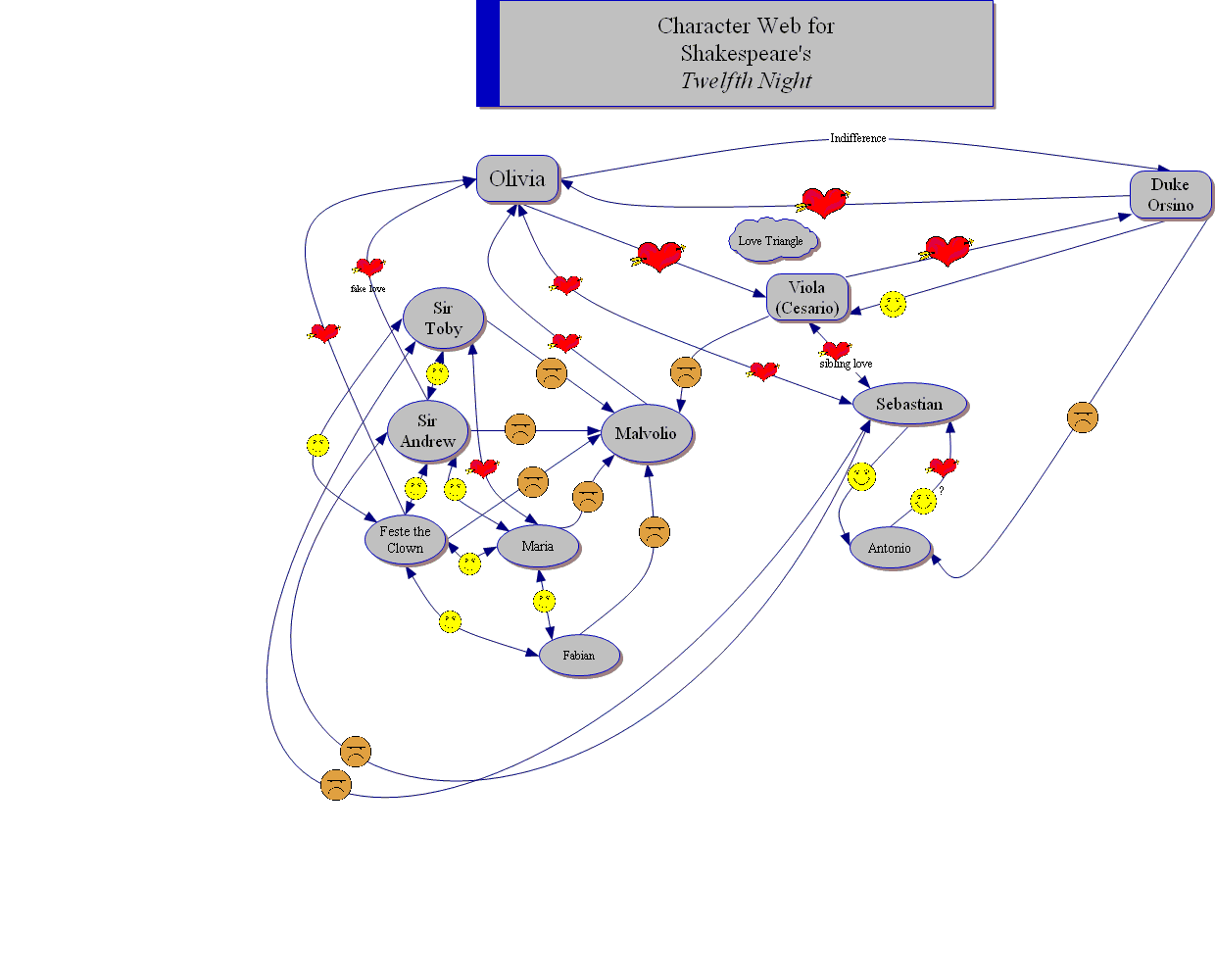
There are three or four characters that spend the play alternating between speaking on behalf of themselves and speaking on behalf of a patron. What's interesting to track, however, is who does it with permission (such as Feste and Viola) and who does it without permission (lookin' at you, Malvolio). Speaking on behalf of a powerful social figure such as Orsino or Olivia kind of gives these envoys exception to the social order, and the complicated messes that ensue are direct responses to this disruption of power.

For example, Malvolio crosses a line (in the minds of Sir Toby Belch, Maria, Feste, and Sir Andrew Augersomething) in act 2 scene 3 when he interrupts their merrymaking by claiming Olivia's authority.

Malvolio: My masters, are you mad? or what are you? Have ye no wit, manners, nor honesty, but to gabble like tinkers at this time of night? Do ye make an alehouse of my lady's house, that ye squeak out your coziers' catches without any mitigation or remorse of voice? Is there no respect of place, persons, not time in you?

Malvolio: Sir Toby, I must be round with you. May lady bade me tell you, that though she harbours you as her kinsman, she's nothing allied in your disorders. If you can separate yourself and your misdemeanors, you are welcome to the house; if not an it would please you to take leave of her, she is very willing to bid you farewell.
Act 2 scene 3
In return, Sir Toby Belch and company claim Olivia's voice  in order to teach Malvolio a lesson by writing letters in her voice to lead Malvolio into a net made by his own ambition and social offenses.

Viola, acting even more completely as proxy for Orsino, gets herself into trouble as Olivia uses her imagination to create a Cesario that rivals Orsino's vision of Olivia.

Olivia    Here, wear this jewel for me, 'tis my picture;
              Refuse it not; it hath no tongue to vex you;
              And I beseech you come again to-morrow.
              What shall you ask of me that I'll deny,
              That honour saved may upon asking give?
Viola     Nothing but this; your true love for my master.
Act 3 scene 4

Viola     The honourable lady of the house, which is she?
Olivia    Speak to me; I shall answer for her.
              Your will?
Act 1 scene 5
Eventually characters speak on behalf of each other without even realizing it, i.e. Sebastian for Cesario/Viola, Cesario/Viola for Sebastian. Additionally, Sir Toby fabricates on behalf of Olivia, Feste on a priest, etc.

Monday, October 19, 2015

Foolin Around

I've really latched onto the language structures that Shakespeare uses for different characters. Specifically, noble, supernatural, or isolated characters are distinguished often by their poetic forms. Overlapping with my interest in the Fool trope, I would love to explore the Fool and how he is distinguished from society and from the sphere of knowledge in each play one appears. Maybe Twelfth Night or As You Like It. Hamlet also pretends to the role of the Fool in order to shortcut the niceties that bind him. There's a lot here to explore, and I still am obsessed with the Joss Whedon connection, but I'm not sure that will fulfilled the parameters of this project.

Saturday, October 17, 2015

God King Lear vs. Human Lear

When Lear gives his daughters stewardship, he assumes that they will respect the divine right of rulership that he has not abdicated. No, he never actually abdicated. He is still referred to as the King and still refers to his places as appointed by the gods.

However, Lear has the foresight to see bureaucratic complications due to his age. I imagine the revelation that he needed help to run his kingdom wounded his pride, and I assume much of his anger latched on to the realizations that Goneril and Reagan discounted any divine right Lear believes he has.  I mean, as he loses his faculties and thus his grip on power due to age--the reason for his retirement in the first place--how can he handle that gracefully? A decision he didn't want to make backfires. How bittersweet is it that Lear foresaw the conflicts of his aging mind ruling the kingdom, and yet as his worst fears become validated by his inability to handle power dynamics or control his own family (although, granted, two of them are devil spawn).

I think that Sir Ian McKellan has a point (see video below). Lear's rage is in part due to the conflict of his faith in his kingship and the removal from his humanity that belief instills. If we say Lear loses his faith by the time he is happily and briefly reunited with Cordelia in prison, it seems that giving up pretensions of godliness in exchange for humanity is a central arc to Lear's character. I don't know if that's redemption or just the tragedy of learning a vital lesson too late.


Friday, October 9, 2015

Spit, fire! spout, rain!


Lear is angry.

He's not just mad; his emotions consistently manifest in rages that fixate on the most convenient target, be it a daughter or loyal subject. I was particularly captivated by Lear's anger being manifested and further fueled while he's out in the storm with the Fool. In fact, Kent and the Gentleman set up the tone for Lear for all of act three during the first scene.

Kent
Where's the King?
Gentleman
Contending with the fretful elements;
Bids the wind blow the earth into the sea,
Or swell the curled waters 'bove the main,
That things might change, or cease; tears his white hair,
Which the impetuous blases with eyeless rage
Catch in their fury and make nothing of,
Strives in his little world of man to outscorn
The to and fro conflicting wind and rain;
This night wherein the cub-drawn bear would couch,
The lion and the belly-pinched wold
Keep their fur dry, unbonneted he runs,
And bids what will take all.
Lear is taunting the destructive force of a storm that exceeds any in living memory. When cautioned against his exposure to it, Lear argues that it's a storm of justice and he's "a man more sinned against than sinning." Again, when Kent tries to convince Lear that staying outdoors is too dangerous, Lear declares to "let me alone." Lear battles his own anger as he refuses to seek the peace of shelter. The "wrathful" storm is an outlet for Lear's emotional pain of losing three daughters, a kingdom, and possibly his mind.

Lear
This tempest in my mind
Doth from my senses take all feeling else,
Save what beats there...
I can't help but relate. Anger is numbing and powerful and makes you feel as if you could retain some control despite all evidence to the contrary. Lear dies from heartbreak and grief in the end. The pain of reality doesn't need to be felt in the moment all of the time. The only way to survive sometimes is to shut out everything you don't need and cling to what is necessary. Something has to remain to motivate action. It's almost as if Lear as a man dies in the storm and only endures to ensure a righting of his kingdom.

(In a very abrupt shift of tone, I found King Lear Limericks.)

Tuesday, October 6, 2015

Joss Whedon and Shakespeare Are Bros

I'm a sucker for a good Fool. It explains my dating life.

The Fool is a trope that has never really disappeared. It's grown and evolved to immerse itself in the stoner, the deadbeat, the nerd--any one that falls into a outcast social group has the freedom to get layers.

Ideally. I can think of many examples of lazy writing, so let's just specify that well-written genre entertainment has this trope.

"[The Fool] may be seen as half-witted, a natural whose wisdom is instinctive clairvoyance, or as a sage rationalist, shrewd and thoughtful. [...]He has also been portrayed as embodying the conscience of the King, as a voice of social protest, and as a court fool who 'shrivels into a wretched little human being on the soaking heath' (Bayley, 61)." R.A. Foakes, "Introduction to King Lear," Bloomsbury, pg. 133.

The writer/director who most forcibly embraces this conceit is Joss Whedon. If you have watched any TV show, seen any movie, or read any graphic novel that Whedon has been involved in, you know that amid the character dynamics and clever quips is a character who seems to see through illusion and transcend distraction. The best example is probably Cabin in the Woods (2012), in which Whedon parodies popular entertainment by relegating initially complex and varied characters into static tropes, including "The Fool." However, as Cabin in the Woods is rated R, so a more approachable example would be Buffy the Vampire Slayer or Firefly. Characters who don't fit into any of the societal categories such as Spike, a vampire who can't hurt humans, and River, an insane prodigy that straddles the divide between culturally human and instinctively animal. These characters see what other characters don't, and these characters can say what other people can't. There is another excellent Fool in Twelfth Night. I'm eager to see how Shakespeare varies the role.

Tuesday, September 29, 2015

"Bear"-ly Hanging In


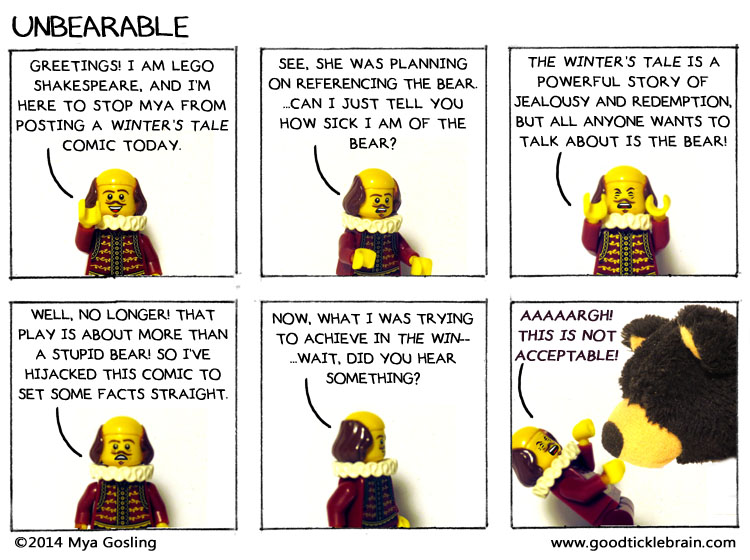
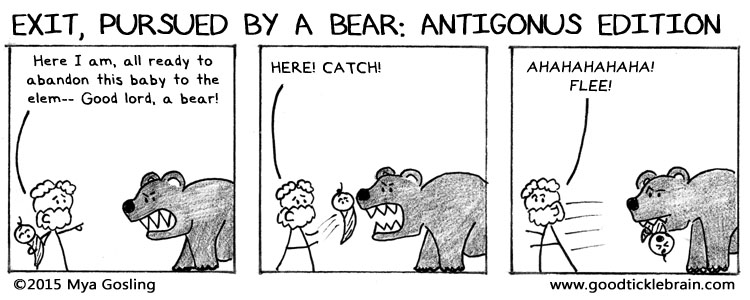
I'm tempted to just leave these here and refrain from commenting, but the irony of letting the bear speak for itself after reading the first panel was too much.

The biggest struggle for me is trying to remain sympathetic to all characters. It's an emotionally charged play, and it's hard to remain objective about characters, especially Leontes. With so much left to interpretation as we discussed in class, I can't help but project my own experiences and relationship dynamics onto the characters. I don't like any of them. Maybe that's the point. This play embraces strong emotions--jealousy, rage, betrayal, passion--and facing down powerful emotions like that requires commitment. It's easier to be dismissive and marginalize the characters. I'm looking forward to a good adaptation to help me get over my own minor baggage blocking my view. Did anyone find one?

Saturday, September 26, 2015

Needing/Getting....validation


Revising this sonnet was tough. I understand meter and I can pull off rhyme when I have to, but doing them together just might kill me. Dr. Burton is officially a mad wizard.

My first order of business was to write a closing couplet that I liked. It was easier to make cuts and changes after I knew where I wanted to end. I've had a difficult time keeping a narrative flow while rhyming (who else is grateful for rhyming dictionaries?), and there's one or two lines I'm worried about with the accents of iambic pentameter. Any and all criticism is welcome!

I found that I really hated the "corrode" line because it felt bulky, so I revamped a little producing an official 4th draft. I think I'm finally happy.

Needing/Getting by OK GO

It’s months I’ve been waiting, patient, sincere,
Until your tired, baggaged heart is patched.
Need warps the mind and reason disappears
Yet getting is different, some dream detached.
Such dreams against a tender heart prevail
If love’s alteration is the attempt.
When I try to forget you, logics fail,
Creating “what ifs” to haunt my lament.
Still I’m hoping for months—hoping for years—
That amnesia, dementia, or disease
Disables my mind and numbs all my fears.
This stagnation of choice may then unfreeze.
I would wait evermore for a story
That ends with anyone but me being lonely.


1st draft

I’ve been waiting for months, lingering near
Til the weight of your baggaged heart will mend.
Need wraps the mind and reason disappears
Yet getting is an endless road to wend.
False dreams will a quick mind’s defense erode
If alternation in love you attempt.
Fate parts our lives with walls I can’t corrode
Grace taunts and haunts me in my snubbed lament.
I’ve been hoping for months—for years—
Hoping amnesia, dementia, disease
Cripple my mind and numb my heart with fears.
Fool! Love falls not to will or kneeling pleas.
As such my love keeps its twice-quenched flame
While my fixation can’t recall my name.

Tuesday, September 22, 2015

OK GO Goes Shakespeare

Subject matter was probably the most difficult part of this process for me. I tend to over indulge my morbid tendencies, so in an effort to hedge that leaning, I chose to do an adaptation. I've been a fan of a blog that takes popular songs and turns them into pretty good Shakespearean sonnets. Here's my attempt to sonnet-ify "Needing/Getting" by OK GO.


I’ve been waiting for months, lingering near
Til the weight of your baggaged heart will mend.
Need wraps the mind and reason disappears
Yet getting is an endless road to wend.
False dreams will a quick mind’s defense erode
If alternation in love you attempt.
Fate parts our lives with walls I can’t corrode
Grace taunts and haunts me in my snubbed lament.
I’ve been hoping for months—for years—
Hoping amnesia, dementia, disease
Cripple my mind and numb my heart with fears.
Fool! Love falls not to will or kneeling pleas.
     As such my love keeps its twice-quenched flame
     While my fixation can’t recall my name.

Trying to interpret the emotion rather than the specific diction was a challenge but also fascinating. I tried to channel my own recent relationship, but I also wanted to maintain the simple message of their song.

Sunday, September 20, 2015

Fairies Made Your Bed; Now Lie in It


I loved the live performance of A Midsummer Night's Dream at the Castle Theater. The lovers were suitably hilarious and superficial, but the final act's handling of the couples nagged me all weekend. Most productions embrace the light comedy and sketch silhouettes of the lovers; they're not really people so much as fairy stereotypes of humans. Helena, in particular, appears to be nothing more than a girl whose desires overrule her reason. She usually has no depth, which always disturbs me at the end of the play. I want to empathize with her even though she's annoying and shallow (like she could love Demetrius for his personality). She ends up on a situation reminiscent of my nightmares: she's married to a man that she knows doesn't love her. The live production and Michael Hoffman's adaptation prioritize different groups, as seen through Helena's depiction in the final act.

Exaggerated lovers at the Castle...and Sarai judging them in the background.

Two sets of lovers dressed exactly the same way. No commentary there. Nope.


In Michael Hoffman's A Midsummer Night's Dream, any glimpse of one young couple is immediately followed by an almost identical shot of the other. They had the exact same wedding and are celebrating in the same way. The couples, as shown above, are dressed the same. They react the same during the mechanicals' play, with stifled laughter and knowing glances. Only during Thisbe's death scene does this pattern break.


Thisbe's death dramatically differs in these two productions. The live one enjoyed the ridiculous aspect, while Hoffman's took a risk and brought a revolutionary tone: sincerity. As Flute displays genuine grief, Lysander and Hermia draw close, slipping into the easy intimacy two people in love. Hermia and Demetrius, however, still stay independent of each other. Demetrius' remarks and raucous laughter during this scene alienated Helena, who laughs but often appears in rapt attention to the drama unfolding on stage.

In both productions, Demetrius immediately cracks wise with Theseus while they clap. However, Hoffman then takes a moment explore a genuine moment, possibly the only one Helena has in the entire movie. Demetrius turns to Helena, pleased with himself (the clip cut off right there) and Helena, who was touched to the point of tears, shifts her gaze to look at him. I can't decide if it's disappointment or regret, but Helena has a moment where she sees through the illusion of the Demetrius she built in her mind, the Demetrius that wooed her under a spell, the Demetrius who played the part of a lover to perfection.

The live production at the Castle emphasized the contrast between the nerds and the rockers (for lack of a better word) and cultivated rich comedy. Everyone had fun with the play and created an energy that juxtaposed beautifully with Oberon, Titania, and Puck's metatheatrical goodbye. This transition underscored what the production had masterfully executed: the difference between fairy and human. Each were depicted with flaws, but the fairies emphasized competition (especially Puck and Titania's attendants) while the humans sought solutions.

Hoffman's film instead has a much larger focus on the lovers. It makes sense that little moments of interpretation such as Helena's reaction to Demetrius punctuate the film. It makes me see a Helena I didn't think could exist but is fascinating to imagine.

Wednesday, September 16, 2015

Language, Language


Professor Burton discussed in class how A Midsummer Night's Dream really needs to be watched in order to experience the layers of the play. I began to believe that more and more as I watched adaptations. I've seen a lot of adaptations of Midsummer, and this time, watching an old 1968 adaptation that embraced a traditional approach, I was struck by how A Midsummer Night's Dream needs to be heard.

I know from literary courses that Shakespeare carefully applies rhyme and rhythm to his social classes, in part to vault their speech to a poetical level, but also to play with the idea of "importance." The fairies, of course, speak in iambic pentameter and couplets. Athenian nobility retains the rhythm but loses the consistency of the rhymes. The mechanicals, with a few exceptions, speak in prose.

However, reading the play with these language distinctions lacks the status that the actual performance can deliver. Fairies are difficult to take seriously, especially when they are as petty as Oberon, Titania, and Puck; however, with a musical cadence and consistent, musical rhyming, it's difficult not to fall into their mentality. They carry authority because their speech is distinctly different than those around them.

This fairly strict distinction can (depending on the direction) make Bottom's speech in Act V (when he initially awakes) a complicated, central passage in the play. Bottom speaks in iambic pentameter, like the fairies. Is it a residual effect of Puck's spell? Is Bottom glimpsing some cosmic truth traditionally beyond human understanding? Is Bottom being juxtaposed against the language mastery of the fairy world?

Sunday, September 13, 2015

Choosing the Simpler World

A Midsummer Night's Dream has always been one of my favorite plays, and not just because I killed it in 8th grade as Oberon. There is something about the unpredictable exaggeration of the fairy world that amplifies societal strictures across all three groupings of characters. Puck and Oberon's separate attempts at wooing, for example, lead with the assumption of male superiority. However, there is so much more nuance to that than popular interpretation seems to allows for.

Neil Gaiman just gets Shakespeare.


However, as I explored supplemental reading in preparation for class, I was alarmed and frustrated with how often the women-are-property argument was used. While Shakespeare's complex handling of gender dynamics evolved over his career, Shakespeare rarely is so overtly general with his gender roles. I feel that if anything the chaos of switching affections and supernatural machinations take the power of sexuality away from either gender and emphasizes its uncontrollable nature. The temperamental elements of the fairy world parallel nature more than they parallel the social construction of human society. Shakespeare makes a strong case for attraction being beyond human control. I mean, how else do you account for Helena's irrational love of Demetrius? There is none.

Over simplifying this conflict guts the implications of Ass-Bottom and Titania's fling. By using a natural element--a flower--Oberon and Puck bend the rules of society, nature, and choice (specifically the idea of love being a choice) to topple Titania's resolve against her union with the fair king.

Neil Gaiman takes this conflict a step further in his Sandman comic when he draws Oberon's court into the human realm to enjoy a performance of the play. Dream, the primary character, mediates the encounter, bridging the staunch humanism of the actors and the more animalistic nature of the fairies. They dynamics leap off of the page and add an interesting context to the original source material.

(Also, this is a really interesting combination of a staged adaptation accompanied by the original text.)

Tuesday, September 8, 2015

A Lingering Glance Here, a Lingering Glance There

I, too, watched The Hollow Crown's Richard II. While I had watched the movie before, I tried to watch it now in the context of a stage interpretation of familiar events. Comparing Richard to the onslaught of historical biopics made this viewing so much more fun.

As with recent films like J. Edgar, JKF, The King's Speech, Frost/Nixon, Lincoln, and The Iron Lady, rumors fill the gaps of the story in, adding color and speculation to a framework of facts. Ben Whishaw plays an effeminate Richard, and the first half of the movie is charged with looks and silences that lead us to conclude that Richard has relationships with most of the young pretty men at court.

Look at those lingering eyes.
Whishaw's gentle performance through the end of the play maintains an intimate dynamic with his followers and his captors. It helps to maintain a sympathetic air around a man who, in the harsh light of text, is a clear cut bad king.

Wednesday, September 2, 2015

Taking One for the Team . . . I mean King

From the very beginning of the play, Richard has subjects who step up to take responsibility for his decisions. Ordering Mowbry to kill Glouchester isn't a radical move for a king fighting to keep the power of his throne. However, the language Shakespeare uses and the secrecy he implements during the scene at Gaunt's house reeks of cowardice, an attribute no one wants in a sovereign.

That being said (and as many posts so far have discussed), Shakepeare's emphasis on Richard's kingliness through Boilingbroke juxtaposes the assumptions we make of a king, especially one who is saved by the grace of history, with the blatant cowardice of his actions. Unless being king exempts him from cowardice? Does power overcome deception, or is power itself a deception if lies are needed to keep it?