Showing posts with label posted by Sarai D. Show all posts

Sunday, November 22, 2015

Rough Draft

Sarai Davila
Professor Gideon Burton
English 382
22 November 2015

Romantic Shakespeare and American Realism

The literary tradition of juxtaposing country and city life to exacerbate the differences between the two is a far-reaching one. It gained most of its fame, however, in the 1600’s when various writers used this pastoral idealism to demonstrate the stark contrast between how people in different settings might act. These were most certainly stereotypes rooted in a certain level of truth, and therefore many writers utilized this strategy. Shakespeare took this idea to another level by using many elements, setting included, to characterize the plot and develop the characters. These strategies have been copied by writers throughout the years, writers who romanticized settings, elements, and so forth to demonstrate distinct characteristics in order to further the plot. In American literature, previous to the 1800’s, settings and non-human aspects were either described in great detail without emotion or not at all. They were merely physical descriptions. The era of realism, but more specifically “regionalism”, brought a very different style to the written word. Settings and non-human elements, such as mythical beings, were suddenly characters in their own right. Essentially, the characterization of settings had come full circle. A great deal of 19th century regionalism and local color writing in American literature was indirectly inspired by the representation of characters in Shakespeare’s romantic countryside.

As a general idea, anybody who has never visited the English countryside has one idealized notion of what they might experience when they do. A lush, green and pleasant landscape where quaint farmers and shepherds speak with thick accents and smile with ruddy cheeks. They might invite you in, give you fresh goat’s milk, teach you a few things around the old farm, and if you happen to be a young marriageable woman, you might just fall in love. This notion has been drilled into the minds of all non-British people from all angles. It crops up most specifically in the romantic literature and the subgenres. Contrary to these picturesque dioramas is the reality of a cold, rainy, sometimes very sometimes very bleak place. Especially during the 1600’s when Shakespeare’s pastoral comedies were being performed. These beautiful images certainly existed to a certain degree, but not to the level that the population expects. In the modern world you are even less likely to encounter such incredible, untouched landscapes, although you are also less likely to encounter starvation. {At some point in this paragraph I will use this quote: “…attempts to sell a landscape and a lifestyle that no longer exist, and more significantly only did so (if they were ever a reality) at the cost of all sorts of dispossession” (Gilroy xii).
OUTLINE:
This next paragraph would delve into the history of pastoral settings in plays, specifically in Shakespeare and in As You Like It, as well as in various other comedies. The Norton edition of As You Like It has an article called “Perspectives on Pastoral”, with this quote, although I may use another to discuss the meanings and uses of pastoral settings. “The pastoral permitted and encouraged opportunities for mixing in one work ‘imitation’ with ‘invention’, art with artifice, the artless with the artful—and generated discussions of such mixes” (Colie 254). I want to also work in some of the history of the genre, specifically before Shakespeare’s time. I can then point out that despite his imitation of previous traditions, he is still the most recognized writer from that time period, and thus we can presume that he had a farther-reaching influence on later genres.

I would like to also use Midsummer here to discuss the use of setting in something other than pastoral: woods setting vs court setting, and how that affected characters and their actions. Especially since this also has the aspect of crossing worlds when the lovers venture into the woods and begin acting more recklessly, bringing to light the more carnal sides of them. This is not pastoral, in genre, but it does display exactly the same principles of genre that one might find there. Shakespeare uses this setting to exacerbate their behaviors, and how nature affects that. And again, in this play the court and city life is cold and unfeeling when compared to the wild woods.

Next could be a paragraph or two analyzing the various affects of this trope. Basically identifying the stereotypes within this scope. Rural and pastoral as being playful and fun, woods and being wild and representative of human nature, city as being rigid and classist. I can identify the aspects and how they take these ideas further while talking about how this is a romantic form of literature.

I would need to go into depth about the local color genre in American literature, at some point, and I would do that here. I might use Mark Twain and Huckleberry Finn as an example because I think he’s the strongest example of that type of writing. I could also bring the romantic genre into this again just as an example of how far-reaching that type of trope is. The story Young Goodman Brown is a perfect example of woods and wild, sinful humans. But again I’d bring it back to realism and how a seemingly unconnected part of American lit could still be affected by the genius that is Shakespeare.

Works Cited

Shakespeare, William, Leah S. Marcus, and Rosalie Colie. "Criticism." As You like It: Authoritative Text, Sources and Contexts, Criticism. New York: W.W. Norton, 2012. 254-268. Print.
Gilroy, Amanda. "Introduction." Green and Pleasant Land: English Culture and the Romantic Countryside. Leuven: Peeters, 2004. Xii. Print.

Tuesday, November 17, 2015

The Many Theses

This is the general direction I am taking my paper at the moment, but I have more research to do on this literary tradition. Any instances that you've spotted would be incredibly helpful.


Thesis Types:

1. {policy}

The English landscape and pastoral life should be looked at through a different scope than Shakespeare’s plays because his version is a romanticized and unrealistic representation.

2. {definition}

The characters in Shakespeare’s plays, in particular his comedies, are understood through his use of setting to display personality traits and societal norms.

3. {evaluation}

Shakespeare’s display of the romantic English countryside is a better way to understand the literary tradition of idealizing pastoral life than that of his contemporaries and the poetry of author’s that followed him.

4. {causal}

Much of modern realism and regionalism in American literature was indirectly inspired by the representation of characters in Shakespeare’s romantic countryside.

5. {comparison}


Many readers find Shakespeare’s portrayal of pastoral and country settings to be beautiful and idealistic, but in reality they were romanticized and trumped up versions used to further the plot of the play without going into great detail about the characters themselves. 

Sunday, November 8, 2015

Beauty and Belief

I wasn't sure what to blog about today, and it seemed that nobody was entirely sure. So I decided to write about my experience with the Beauty and Belief symposium. I attended the Friday session at 12:30 in the MOA. My absolute favorite talk was by Joey Franklin, who I had as a teacher last semester for Creative Nonfiction. He wrote about the impact of personal essays, and how they connect us as people. He dissected the rise and fall of the personal essay and how it has to began with a confession to the reader, because to properly feel anything and understand what the writer learns we must connect to their personal experience. I found this interesting because this is actually how we connect with any literature. The most outlandish stories find their footing in the fact that even fantastic and unbelievable characters have human emotions and experiences-and that's where universality is born. This is present in all forms of literature, prose, poetry, plays, films, etc.

Anyway, this is what I learned from the symposium, which I found fascinating and uplifting. I also particularly enjoyed a talk that was about reconciling being an artist in the gospel where it's often hard to be creative. I know this struggle personally, so I found this perspective useful. It's important to remember that the gospel lives in beauty, and therefore we must always strive to find beauty in creativity. Great stuff.

Wednesday, November 4, 2015

Annotated Bibliography

For my paper I think I'll probably be focusing in on the country vs town life aspect in Shakespeare's plays, and in less specific terms, on the role of setting in characterization, plot development, etc. So far I have found "As You Like It", and "A Midsummer Night's Dream" to be the most relevant to my topic.

As for sources, so far these are the ones I've found:

1. Gilroy, Amanda. Green and Pleasant Land: English Culture and the Romantic Countryside. Leuven: Peeters, 2004. Print.

I found this source by searching "rural" as a keyword in the slightly more general search of "pastoral in literature". By using these two together I found this book about the culture of the pastoral setting in England. I think that reading this will help me understand both the actual culture in the countryside in England, and also just the more romanticized version of that reality.

2. Wagner, J. A. Voices of Shakespeare's England Contemporary Accounts of Elizabethan Daily Life. Santa Barbara, Calif.: Greenwood, 2010. Print.

This is an online reference source that I found through the BYU Shakespeare database. It's basically an online collection of various articles, sources, etc. of life during that time. I think this will be useful in contrasting my above source because these are all different, and more accounts of actual life, which includes city life. It doesn't have much to do with literature, but it pinpoints this time period which will be useful in deciding how the city/country juxtaposition works within Shakespeare's time period.

3. Dobson, Michael. The Oxford Companion to Shakespeare. Oxford: Oxford UP, 2001. Print.

The Oxford Companion to Shakespeare. I found this just by searching for Shakespeare in the HBLL search engine. It basically has features on every play, including context, etc. I can use this for both the plays I'm looking at and because it doesn't have criticism, it'll be perfect for just learning more about the general text.

4. Shakespeare, William, and Leah S. Marcus. As You like It: Authoritative Text, Sources and Contexts, Criticism. New York: W.W. Norton, 2012. Print.

The Norton Critical Edition of As You Like It is the book that Professor Burton provided for Jordan and I for our research. I think that the source and reference section in the book will be helpful because it will provide some context for this specific play. A play I know very little about. It does also have more critical sources, which I can use in my later research. One of the more general articles though has information on animal/human differences, which piques my interest.

5. Boyce, Charles, and David Allen White. Shakespeare A to Z: The Essential Reference to His Plays, His Poems, His Life and Times, and More. New York: Facts on File, 1990. Print.

The Shakespeare A to Z. I think that someone in class had this book. I found the title on the Brazen Serpents blog post, and I thought it might be a helpful way to get an at-a-glance idea of which other plays will be most helpful to my research. It is checked out at our library but I'm going to get the one from the Provo library.

Sunday, November 1, 2015

Hero, the Hero of my Dreams

I'm also part of the group doing the scene from Much Ado. I'm pretty excited to work on this, as Hero is one of my favorite characters in a Shakespeare. I can't wait. This scene was from Erin's suggestion, and although I don't know the exact motivations behind it, I can imagine it something to do with the hilarity of the scene and the lines. These are my lines, although as has been mentioned, we won't be doing all of them necessarily. Cutting will be implemented.

HERO
Good Margaret, run thee to the parlor;
There shalt thou find my cousin Beatrice
Proposing with the prince and Claudio:
Whisper her ear and tell her, I and Ursula
Walk in the orchard and our whole discourse
Is all of her; say that thou overheard'st us;
And bid her steal into the pleached bower,
Where honeysuckles, ripen'd by the sun,
Forbid the sun to enter, like favourites,
Made proud by princes, that advance their pride
Against that power that bred it: there will she hide her,
To listen our purpose. This is thy office;
Bear thee well in it and leave us alone.
HERO
Now, Ursula, when Beatrice doth come,
As we do trace this alley up and down,
Our talk must only be of Benedick.
When I do name him, let it be thy part
To praise him more than ever man did merit:
My talk to thee must be how Benedick
Is sick in love with Beatrice. Of this matter
Is little Cupid's crafty arrow made,
That only wounds by hearsay.
Enter BEATRICE, behind
Now begin;
For look where Beatrice, like a lapwing, runs
Close by the ground, to hear our conference.
HERO
Then go we near her, that her ear lose nothing
Of the false sweet bait that we lay for it.
Approaching the bower
No, truly, Ursula, she is too disdainful;
I know her spirits are as coy and wild
As haggerds of the rock.
 HERO
So says the prince and my new-trothed lord.
 HERO
They did entreat me to acquaint her of it;
But I persuaded them, if they loved Benedick,
To wish him wrestle with affection,
And never to let Beatrice know of it.
 HERO
O god of love! I know he doth deserve
As much as may be yielded to a man:
But Nature never framed a woman's heart
Of prouder stuff than that of Beatrice;
Disdain and scorn ride sparkling in her eyes,
Misprising what they look on, and her wit
Values itself so highly that to her
All matter else seems weak: she cannot love,
Nor take no shape nor project of affection,
She is so self-endeared.
 HERO
Why, you speak truth. I never yet saw man,
How wise, how noble, young, how rarely featured,
But she would spell him backward: if fair-faced,
She would swear the gentleman should be her sister;
If black, why, Nature, drawing of an antique,
Made a foul blot; if tall, a lance ill-headed;
If low, an agate very vilely cut;
If speaking, why, a vane blown with all winds;
If silent, why, a block moved with none.
So turns she every man the wrong side out
And never gives to truth and virtue that
Which simpleness and merit purchaseth.
 HERO
No, not to be so odd and from all fashions
As Beatrice is, cannot be commendable:
But who dare tell her so? If I should speak,
She would mock me into air; O, she would laugh me
Out of myself, press me to death with wit.
Therefore let Benedick, like cover'd fire,
Consume away in sighs, waste inwardly:
It were a better death than die with mocks,
Which is as bad as die with tickling.
 HERO
No; rather I will go to Benedick
And counsel him to fight against his passion.
And, truly, I'll devise some honest slanders
To stain my cousin with: one doth not know
How much an ill word may empoison liking.
 HERO
He is the only man of Italy.
Always excepted my dear Claudio.
 HERO
Indeed, he hath an excellent good name.
 HERO
Why, every day, to-morrow. Come, go in:
I'll show thee some attires, and have thy counsel
Which is the best to furnish me to-morrow.
HERO
If it proves so, then loving goes by haps:
Some Cupid kills with arrows, some with traps.
Exeunt HERO and URSULA

Tuesday, October 27, 2015

As You Like It


I have thoroughly enjoyed reading this play. There are so many clever moments in the dialogue, and it's just nice to read a comedy after reading King Lear. (I love King Lear, I promise). In terms of my paper, I think that if I focus on the settings theme I've got a great source on my hands. The court is a deadly and dangerous place to be while the pastoral scenes are lively and fun. This is similar to King Lear, with the forest/storm scene and the ensuing chaos, The Winter's Tale, with the literal passing of time and location change that made for a polarized play, and Midsummer Night's Dream with the fairies and their dark side in the woods. I especially think that one is perfect because the further away from the court you go the more juxtaposed it is. This actually makes me think of my reading for my American Literary History class. We read a piece by Crevecouer, who talks about the three different places in the burgeoning American landscape. The city folk, the more working class, and the backwoodsmen. It fits into this mindset very well. Perfect for my assertions. If I go with language however, I think I would be better-suited to looking into the more oft-read plays, because those are the ones that younger readers are more exposed to. I have a feeling I'll go with setting just because we've gone over it so much already. 

Anybody looking for anything in regards to gender roles might like this play. Rosalind has quite a bit of power, yet she is also dressed as a man while she gains that power. So is this female power, or male power? And her power is specifically over a man, so that is even more interesting. 

Back to my topic, after my experiences working on A Midsummer Night's Dream, I find that these setting changes have a great effect on the audience. In particular, the younger set. They most definitely notice the difference. 

I looked up information on the settings in Shakespeare, and in the blogisphere I didn't dig deep enough to find anything about rural settings, but I did find something interesting about the settings in general. The author delved quite deeply into the fact that Shakespeare lived in England but often set his plays elsewhere. This makes me wonder if perhaps he was using the rural/city contrast to amp up his knowledge of other places, because that's an aspect of culture that can be seen everywhere. 

http://calshakes.org/blog/2014/06/shakespeares-settings/

Monday, October 26, 2015

Players and Lovers


I want to address two different quotes from my play. One is wholly more self-aware, and one is just an entertaining and clever ploy that I can't help but draw attention to. The first is the classic, "All the World's a Stage" poem in Act II Scene VII, from Jacques.

  All the world’s a stage,
And all the men and women merely players;
They have their exits and their entrances,
And one man in his time plays many parts,
His acts being seven ages. At first, the infant,
Mewling and puking in the nurse’s arms.
Then the whining schoolboy, with his satchel
And shining morning face, creeping like snail
Unwillingly to school. And then the lover,
Sighing like furnace, with a woeful ballad
Made to his mistress’ eyebrow. Then a soldier,
Full of strange oaths and bearded like the pard,
Jealous in honor, sudden and quick in quarrel,
Seeking the bubble reputation
Even in the cannon’s mouth. And then the justice,
In fair round belly with good capon lined,
With eyes severe and beard of formal cut,
Full of wise saws and modern instances;
And so he plays his part. The sixth age shifts
Into the lean and slippered pantaloon,
With spectacles on nose and pouch on side;
His youthful hose, well saved, a world too wide
For his shrunk shank, and his big manly voice,
Turning again toward childish treble, pipes
And whistles in his sound. Last scene of all,
That ends this strange eventful history,
Is second childishness and mere oblivion,
Sans teeth, sans eyes, sans taste, sans everything.
It's long, I know. But there are just so many different angles to look at this from! First, there's the context in the play, which is that we play roles--that of the baby, the teenager, the adult, the old man, etc. This is important in and of itself because we already know Shakespeare addresses issues of old age and senility. Is this perhaps another jab at the old age that admittedly plagues every person, but is still reprehensible to the youthful characters of the plays? Another angle is that of the performance aspect. Jacques speaks truth when he says that we are all players, on a stage. But this goes deeper than simply our position in life--these are literal roles and we are performing for the world as we go through the necessary roles in life. 
The other quote is from Rosalind in disguise to Orlando, when she tells him he cannot possibly be in love. 
Act III Scene II
A lean cheek, which you have not, a blue eye and
sunken, which you have not, an unquestionable
spirit, which you have not, a beard neglected,
which you have not; but I pardon you for that, for
simply your having in beard is a younger brother's
revenue: then your hose should be ungartered, your
bonnet unbanded, your sleeve unbuttoned, your shoe
untied and every thing about you demonstrating a
careless desolation; but you are no such man; you
are rather point-device in your accoutrements as
loving yourself than seeming the lover of any other.
So in this scene Orlando asks Rosalind in disguise why she doesn't believe he can be in love with Rosalind, and despite knowing full well his complete devotion, she still goes into this lengthy description with him. I find this rather characteristic of this play in general, and of this character. It's cunning and witty, and she manipulates him in the kindest way to get what she wants. 

Sunday, October 18, 2015

Themes and Plays

Honestly, it's been pretty tough to figure out which themes I want to expand on. There are so many! I liked talking about jealousy, and about the written asides in King Lear. And I also think that within those there are still so many different things I can talk about.

I suppose though that one of the themes I explored that I think I can expand on quite a bit would be the idea of the setting changing the behavior of the individuals. This was a big part of Midsummer, and I think that it played a role in most of what we've read. In Lear, being in the woods and in the storm brought about this madness. In The Winter's Tale, being outside of the palace and in the woods made a light and festive experience for the audience. Etc. I'd like to see how this plays out in other texts.

Another theme I think that I could look into would be the representation of darker and more carnal selfs throughout the works. Again, a big player in Midsummer, but possibly in other plays as well.

I think as for reading, I'd like to try The Taming of the Shrew, or Love's Labour's Lost. And maybe Julius Caesar. I've never read any of those and would like to finally experience them.

Wednesday, October 14, 2015

Tell Me Sweet Little Lies


This play has been full of deceit and lies from the beginning, with Goneril and Regan undermining Lear, and then Kent and Edgar in disguise. Oh and Edmund committing treason. One interesting part of the script though is the use of the "aside". In just the fifth act alone Goneril has three asides to the audience. Moments where she steps out of the scene for a moment to remind the audience of her evil actions, or to clue them in to what is going on. Shakespeare could have simply had these same asides play out later, in the same scene even, but as actual actions within the play. For example, Goneril poisons her sister. She could have been seen administering the poison, or the play could have relied on the fact that they reveal this later. Instead, there are purposeful and obvious deceits that the audience alone is privy to for a moment. One possible reason for these choice could be that it drives home the them of lying that is prevalent throughout the play. Instead of having their actions simply lead to situations, etc., we see the characters pull themselves out of the action to acknowledge something that they are thinking or doing, but keeping secret from everyone else. The breaking down of the fourth wall actually heightens the drama in these situations, rather than alleviating it or simply involving the audience. 

Saturday, October 10, 2015

Loyalty

Poor, poor Gloucester. 

Well. This play keeps getting more and more depressing. I haven't seen this play since high school and much of it escaped me then. So the sheer hopelessness in this play is getting to me quite a bit more this time around. One tiny ray of light in this play though is the theme of loyalty throughout. We see this most obviously displayed in Kent. He was mistreated by Lear, and yet he still continues to labor on his behalf. Fighting, disguising, etc. He goes and finds him in the dangerous storm, and like the good friend that he is, he gently and consistently persuades Lear to listen to him. That's dedication, without a doubt. 

I found an interesting article about Kent on the Shakespeare Oxford Fellowship about Kent and his potential historical counterparts, here. The author quoted a piece by Samuel Coleridge on Kent's character, and I thought I'd include it here because it's so interesting. 

"Kent is, perhaps, the nearest to perfect goodness in all Shakespeare’s characters, and yet the most individualized. There is an extraordinary charm in a bluntness, which is that only of a nobleman arising from a contempt of overtrained courtesy, and combined with easy placability where goodness of heart is apparent. His passionate affection for and fidelity to Lear act on our feelings in Lear’s own favor: virtue itself, seems to be in company with him. (Complete Works of Samuel Coleridge, Vol. IV, edited by W.G.T. Shedd, Harper and Bros., New York: 1884, pp. 138-39.)"

I think that the contrast between Kent and Lear is especially important because in Lear we see this childish yet senile person who selfishly throws tantrums, all the while inspiring a sympathy of sorts. Kent however keeps a level head, and despite his unfortunate situation in being cast aside and in disguise, he remains loyal. 

On the flip side we have Gloucester, who actually exemplifies both sides of this. He easily switches loyalties from Edgar to Edmund with very little to persuade, but when considering his loyalty to Lear he gets his eyes gouged out. That's another pretty strong display of love. 

Tuesday, October 6, 2015

Old King Lear

Acting
I watched a production of King Lear in high school, done by a high school, and I honestly assumed that once I actually started reading it I would suddenly have all of these "aha!" moments where I realized that the play I saw wasn't that great of a telling. Surprisingly, that has not been the case thus far. My initial thoughts about King Lear match perfectly with my thoughts of him as I read this play.

Anyway. One of the most interesting aspects of this play so far is the power struggle that runs through each storyline. Even down to the servants-Kent is trying to do right by his king, and instead gets treated like a cheap villain. That type of thing. Edmund wants the glory and power that his brother has, and Goneril and Regan want the power that their aging father is clinging to. The power that they seek overrules the familial connections that should be of the utmost importance. I was particularly intrigued by the treatment of Lear by Goneril and Regan during Act II, when they keep denying him access to their homes, and by attempting to reduce his number of servants, they essentially undermine his power and authority. As they take away the number of people who are literally there to serve and obey him, they are increasingly reducing his symbolic power over both them and the world. The fewer people at his command, the less powerful he is. I find it a great use of a tangible, quantifiable tactic that knocks him down a rung, more than once. And if you think about it, power is the ultimate undoing in the beginning as well. Lear isn't really that concerned with "love", in the traditional sense in Act I. He isn't asking them if they love him. He's a powerful king who wants to be sure that he adored, and that his love can be rewarded with monetary gain. Interesting commentary on power..

Sunday, October 4, 2015

Hermione the Muggle (Or maybe not?)


I've seen The Winter's Tale performed before, so the ending did not shock me the second time around. I was pretty surprised during the production to see that happen, though to be honest once they began speaking of a statue I began to suspect. It just seemed a little too perfect to have an artist suddenly finish this statue of the dead queen right when everything becomes restored and everybody is found, etc. Especially since Paulina begins to go on and on about the king only marrying again once he finds a woman like Hermione. Initially I did believe that Paulina had faked Hermione's death, and her actions seemed consistent with this. John's post, however, mentioned that there is proof that Hermione had to have been dead the entire time, else certain parts of the play didn't pan out. When I did see the play though it seemed obvious and purposeful that Paulina had been the mastermind behind the plot to teach Leontes a lesson. They played it with this intention, leading me to believe that there was no magic whatsoever, but really only a carefully crafted long con. After reading the play and the blog posts, and understanding the romantic genre better, I can see how this magical aspect fits.

It seems that there is a general consensus about Shakespeare's romances, that they are the most mature of all his writing. I may not have understood that before, and in regards to magical aspects I might have some arguments. But in the general sense of character and plot development, I think that I agree. Hermione and Leontes have a deeper, richer, more complicated love story than do many other couples in Shakespeare's works. When we read Midsummer we identified the fact that those characters are more like tropes, or stereotypes, due to the comedic genre. And even in the tragedies, there is only so much character development.

Tuesday, September 29, 2015

Time

From BYU's production

At the beginning of Act IV, our last stretch of reading for tomorrow, we are introduced to "Time". Time is a character, and a thing, and serves as a chorus. When I saw The Winter's Tale at BYU, and again when I read it for this class, I wondered why time was being brought into the play as a character. In the very first scene of the play we see two of the background characters introducing the setting; so why did Shakespeare not do that again? What could be his purpose in using Time in this interlude?

I looked into the character, and surprisingly much of the scholarship I found on the matter stated quite plainly that Time was being used a simple bridge, to mark the passing of years (something frowned upon for plays at that time). One more recent article that I found though gave perhaps a different explanation for Time, focusing not on the character, but on the hourglass. 

"More significant to an interpretation of this passage, it should be noted that one representation of the hourglass in Renaissance art, as Guy de Tervarent has shown, was an attribute of Youth or Age, depending on whether the superior part of the glass was empty or full. Thus one can surmise that one reason for Time's turning his hourglass is to show the upper part full and hence a potential for growth-life renewed; but also this action indicates that his concern now will be with Youth (Florizel and Perdita) and spring, while the grief-ravaged and aging Leontes must yet for a time endure the winter of his discontent" Raymond J. Rundus, "Time and His Glass in the Winter's Tale". Article

With this in mind, the setting becomes all the more interesting, as does the extreme shift in the mood of the play. It does feel like two different plays, and through Time flipping his hourglass, Shakespeare symbolically flips the world, time, and the mood. 

Sunday, September 27, 2015

Adulting-Revised

An adult Sarai, at her finest. 

I do not think that I am quite mature--
My schoolwork is enough to prove my claim. 
I do my best--now that I know for sure.
But sometimes things continue just the same. 
And as for rest I think I'm in a drought! 
I schedule naps to maximize my time. 
Degrees are worth my lack of sleep, no doubt!
But at this point, just dropping out sounds prime. 
And I won't even start on being broke-
At least this month I easily made rent.
It seems my money just goes up in smoke-
And each new check is treasure-heaven sent!
And in the end I see no single win
So I'll call Mom and ask to move back in. 


I hope that I have all the meter correct! I tweaked the lines my partner and I talked about in class. 

Thanks!

Tuesday, September 22, 2015

Sonnet I

Adulting

I do not think that I am quite mature--
My schoolwork is enough to prove my claim. 
I do my best--now that I know for sure.
But sometimes things continue just the same. 
I do just fine but I'm still so stressed out. 
I schedule naps to maximize my time. 
Degrees are worth my lack of sleep, no doubt!
But at this point, just dropping out sounds prime. 
And I won't even start on being broke-
At least this month I easily made rent.
It seems my money just goes up in smoke-
But maybe groceries is where it went?
And in the end I see no single win
So I'll call Mom and ask to move back in. 

Sunday, September 20, 2015

A Midsummer Inception

See? Woods. 
See? Lights.
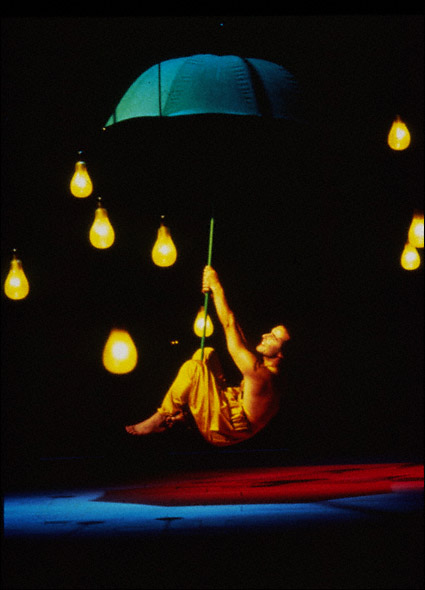
I was in the Castle Amphitheater version, and watched the one on Netflix to compare. This was the same bewildering adaption that was talked about in a previous post. For the purpose of some third party opinion, I'm comparing a scene that didn't involve Hippolyta at all. Act II, scene I, we happen upon Robin Goodfellow and the first fairy. They have their banter, and then Oberon and Titania appear. In our play, the set is minimal, yet indicative. We did not have plastic trees or otherwise, but we were outside, nestled in woodland all around. And we attempted some semblance of flowers and nature in these fairy scenes. The 1996 movie adaption, on the other hand, did not use that same set or even setting. All around the fairies are floating lightbulbs--and that's all. No decorations otherwise, no true set. This was somewhat true of the other spaces in the movie. The scenes all seemed enclosed in their separate sets and were surrounded by some sort of blue fog. Instead of the liminal traveling space between sets, such as pathways, doorways, etc., the liminal space was fairly literal in that there was just nothing in time and space connecting these different places. The fairy scene is the most obvious. There was simply nothing save a few lights. This was an obvious decision to increase the dream aspect, which this adaptation played upon a lot using the actual dream inside a little boy's head as the setting of the entire play. In our version of this scene the fairies are literally in the woods when they interact, drawing more upon the dark human qualities that they possess. The vast difference in setting made for a very unique perspective on the scene. These fairies exist merely in  a dream. There is no Titania, no Oberon, no Puck--all are merely a figment-an apparition in one child's mind. This could be an amped up telling of the performing aspect. We've already seen how performance plays a role in this play, but what if the use of a child being the audience of the play, and us being the audience to him, is merely a commentary on just how little in the world is unobserved, and authentic. The literal dream interpretation begs the question of who is dreaming, and who is actually experiencing life as we see it. 

Tuesday, September 15, 2015

Performance


We touched briefly on the idea of performance in A Midsummer Night’s Dream. I mentioned in class that the fact that there is a play within a play is indicative of the performances that we put on in our daily lives—regardless to whether we realize that or not. In the last act of Midsummer, the royals watch in mirth as the rude mechanicals perform for them. As was pointed out, their play is basically just Romeo and Juliet, but comedic because Pyramus and Thisbe, as well as the rest of the company, are not actors. Two aspects of this are interesting. First, that Shakespeare chose to include a play at all—was he simply including a spectacle for the sake of it, or was there a deeper meaning to this decision? I choose to think the latter—that Shakespeare purposefully placed the play right at the end to point out to us, in the most meta of ways, that we are simply players, as is stated in “As You Like It”. We are not people going about life, simply existing. We are beings of design, meant to perform for the world, each one of us on our personal stage. The second piece of this is also extremely meta. The play, “Pyramus and Thisbe” is not just a story. It’s the plot of Romeo and Juliet. So Shakespeare chose to make fun of one of his most famous plays by making a shenanigan out of it. He basically acknowledged his own plays while writing Midsummer. Was this a commentary theater as an art form, or simply a meta-nudge to his other works? This becomes more interesting when the plays are actually performed because in Shakespeare the fourth wall is somewhat nonexistent. Who was Shakespeare really highlighting here? The actors, the writers, the theater-people who perform for a living? Or the watchers, the audience, the theater-goers who live to perform?

Sunday, September 13, 2015

Fairies in the Woods


One of the most fascinating aspects of A Midsummer Night's Dream to me is Shakespeare's use of both the fairies, and the setting of the play. Both are utilized so that they become more than simply other characters, or trip through the woods. They become symbols, characters, themes--and vital to understanding what the play is really about. 

To start off, the setting; the play begins in Athens, in the midst of a civilized group of people bursting at the seams with issues. Theseus and Hippolyta are meant to get married, but in reality he "wooed her with his sword", Egeus is trying to get his daughter either killed or wed to Demetrius, who loves her, but she doesn't love him, of course. She loves Lysander. As soon as those two decide to take their fate into their own hands, they run away to the woods. That's an interesting and cleverly crafted decision to move them out of civilization into something darker and more wild. As soon as they leave this royal court they find themselves inside a world that they cannot control, and where conventions of society don't exactly exist. And the woods are where everything begins to get interesting.

Within the woods we have the fairies. They also exist in a world outside of social conventions. Naturally they have their own social structure, but it operates on a different playing field. Oberon and his wife can get into magical fights where they use their powers to get their way at all costs. Selfish, childish, or maybe just privy to more primitive human emotions. They are ruled by passions, and cannot be bothered with rules. They simply don't play by those. Puck is an impish, playful, sometimes malicious, example of the most base of human feelings. All of the fairies, really, represent those wild and less manageable emotions. 

Shakespeare uses both the woods and the fairies to display a darker side of humanity. Wild, passionate, outside of standard societal rules, they exist beyond what we think of as normal. 

Tuesday, September 8, 2015

Varying Degrees of Comedy

Shameless advertising.
Thus far I've been in two productions of Midsummer, and have seen many other, including film adaptations. I've even read books based around the simpler plot points of the show. I've learned one major thing in these experiences-something that has been pointed out by many students in the class in various posts and comments. Shakespeare can be interpreted infinite ways. Right now I'd specifically like to touch on comedy. Midsummer is a comedy. It has a rise, and a fall, and it has a conclusion that doesn't end in people dying! Unless you count the play within the play, which we probably shouldn't. Anyway, in the productions I've seen and participated in, the show is invariably funny. However, it does vary in the ways in which it presents the comedy. The text itself is hilarious, filled with word play, and situational comedy, as well as even the perfectly timed, purposeful flubbing of lines that Peter Quince brings to the stage whilst reading the prologue. It's a funny play, no matter how you play it. But when watching the production I am in currently, you'll find a much more emotional production, playing on the situations and the lines, and using the comedy that has already been built into the show, as well as physical comedy. When watching the Grassroots revival a year ago though, myself and the rest of the audience was struck by the absolutely hysterical all-male cast, that played every aspect as a farce. Not a line was serious, and not a single moment was meant to inspire anything except laughter. And again, I have seen other productions where the only comedy was the text and the set, or the text and a specific actor used as a running gag throughout the show. As we read the play we can see a great deal of comedic writing, but we can also look deeper at the characters and dig into their situations and motivations to find either the emotion that lies underneath, or the comedy that we can conjure.

Sunday, September 6, 2015

King Richard II Might be a Sociopath


via


When watching the Hollow Crown version of King Richard II I was struck almost immediately by the casting choices. Although Richard makes some awful choices as king, he never struck me as cold, or unfeeling. Simply haughty and prideful. However, in the movie version of this play, the particular actor chosen to play King Richard gave off a very heartless impression. He smiled, but other than that had very little expression in the beginning of the movie. This is the portion of the story where he commits all of his injurious deeds. Instead of seeming like an irrational human who made poor choices, he seemed like he was enjoying the unfortunate circumstances he was bestowing on his subjects. I thought this an interesting acting, casting, and directorial choice for the film. I expected something entirely different, which may be an unfair bias against the film (although I didn’t dislike the film). Was this the version of Richard II that we were supposed to glean from the play? Or was this a version cooked up in a studio to amp up the drama? I’d like to call attention to one of the comments on my previous post about historical context. Erin pointed out that whatever version of Richard II we get is the one that is presented to us through the text. With this in mind, I still wonder at the characterization of Richard in the play vs the movie. Was he meant by Shakespeare to be this unfeeling? To enjoy his poor choices this much? We know that in real life he was not simply a tyrannical villain who enjoyed causing problems and ruining people’s lives. But again, basing our judgment off the play alone, what can we assume about his character? Was this the Richard II that Shakespeare meant us to know?