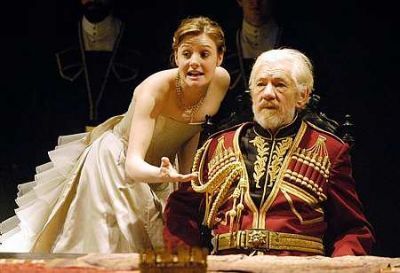
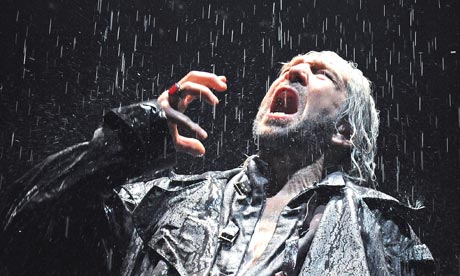
However, Lear has the foresight to see bureaucratic complications due to his age. I imagine the revelation that he needed help to run his kingdom wounded his pride, and I assume much of his anger latched on to the realizations that Goneril and Reagan discounted any divine right Lear believes he has. I mean, as he loses his faculties and thus his grip on power due to age--the reason for his retirement in the first place--how can he handle that gracefully? A decision he didn't want to make backfires. How bittersweet is it that Lear foresaw the conflicts of his aging mind ruling the kingdom, and yet as his worst fears become validated by his inability to handle power dynamics or control his own family (although, granted, two of them are devil spawn).
I think that Sir Ian McKellan has a point (see video below). Lear's rage is in part due to the conflict of his faith in his kingship and the removal from his humanity that belief instills. If we say Lear loses his faith by the time he is happily and briefly reunited with Cordelia in prison, it seems that giving up pretensions of godliness in exchange for humanity is a central arc to Lear's character. I don't know if that's redemption or just the tragedy of learning a vital lesson too late.